
Acoustic Privacy in Open Offices: Furniture That Tames the Noise Without Walling People Off
The Open Office Problem No One Wants to Admit
Open-plan offices were supposed to spark collaboration and creativity. And in many ways, they do. But ask anyone working in one — from a law firm in Tysons to a tech company in Rosslyn — and you’ll hear the same complaint: the noise is relentless.
A coworker’s phone call bleeds into your concentration. A huddle by the kitchen turns into a full-blown meeting. The guy three desks over has a laugh that carries across the entire floor. Noise and lack of acoustic privacy consistently rank as the top complaint in open office environments, and it’s not a minor gripe — research consistently links noise distraction to reduced productivity, increased stress, and higher employee turnover.
The good news? You don’t have to choose between an open, collaborative layout and a workspace where people can actually focus. The right furniture can do the heavy lifting — absorbing sound, creating soft boundaries, and carving out privacy without turning your office into a maze of cubicle walls.
Sound Privacy Pods: A Room Within a Room
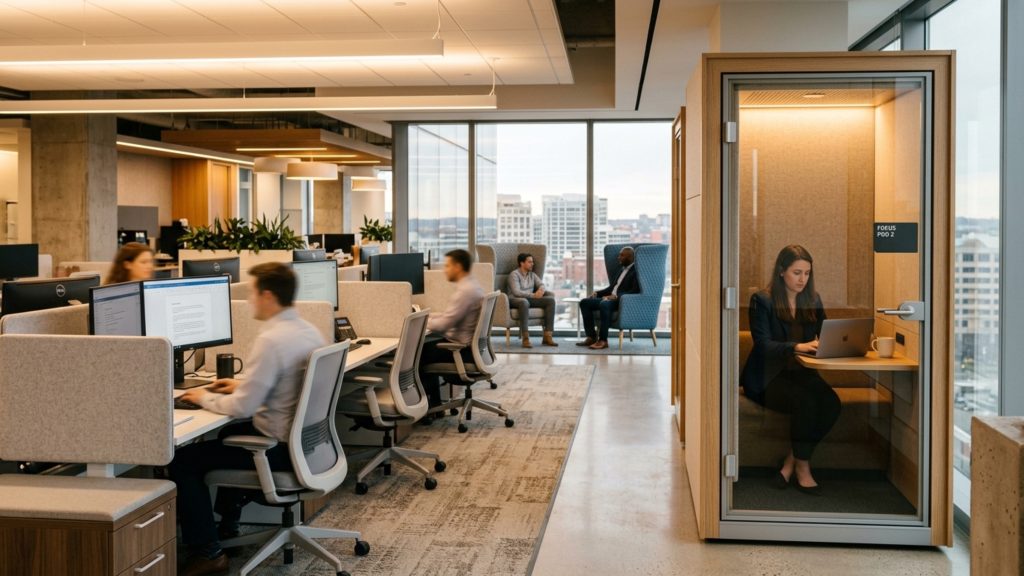
Privacy pods have become one of the most practical acoustic solutions available for open offices. These freestanding enclosures — ranging from compact single-person phone booths to four-person meeting pods — are designed from the ground up with sound absorption in mind. Upholstered interiors, thick wall panels, and sealed glass doors combine to create a noticeably quieter environment inside without requiring construction or permanent modifications to your space.
For offices in Northern Virginia and DC where leased space is expensive and tenant improvements require landlord approval, pods are especially appealing. They’re furniture, not architecture — which means they move when you do, and they don’t require permits.
They’re ideal for phone calls, confidential HR conversations, focused individual work, or small-group video meetings. A well-placed pod near a busy team area can instantly reduce the acoustic overspill that disrupts surrounding desks.
Acoustic Panels Built Into Furniture
Another strategy that’s gaining serious traction is acoustic treatment integrated directly into workstations and common furniture pieces. This isn’t about tacking foam panels to a wall as an afterthought — modern acoustic furniture weaves sound-absorbing materials into the design itself.
Partition screens with thick upholstered faces, workstation dividers lined with high-density fabric, lounge chairs with tall wraparound backs, and even acoustic ceiling baffles suspended above collaborative zones all contribute to what designers call “acoustic zoning.” The goal is to reduce sound transmission between work areas by adding mass and absorption at the source — right where people are sitting and talking.
For open offices with hard surfaces like exposed concrete ceilings and polished floors (common in DC-area co-working and creative office builds), this type of furniture-integrated absorption is essential. Hard surfaces bounce sound everywhere; soft, dense furniture panels absorb it before it travels.
High-Back Seating: Simple, Effective, Underrated
High-back lounge chairs and high-back collaborative seating are among the most underutilized acoustic tools in office design. A chair with a tall, upholstered back creates a natural enclosure around the person sitting in it — dampening sound from behind, reducing the amount of noise that reaches the occupant, and providing a psychological sense of privacy that helps people settle into focused work.
Arranged thoughtfully — facing away from high-traffic areas, grouped in clusters with the backs forming an outward-facing perimeter — high-back seating can carve a semi-private “focus zone” within a completely open plan. It’s a subtle but effective way to give employees a retreat without building a wall around them.
These pieces work particularly well in informal touchdown areas, reading nooks, and heads-down work zones. Pair them with a low side table, good task lighting, and a power outlet, and you’ve created a destination that employees will actively seek out when they need to focus.
Desks That Support Focused Work
Acoustic strategy isn’t just about absorbing sound — it’s also about giving employees enough individual workspace comfort that they’re not constantly shifting around looking for a quiet spot. Well-configured workstations with appropriate panel heights, combined with access to height-adjustable sit-stand options, help people settle in and work more effectively. All Business Systems carries a full range of quality standing desks that integrate smoothly into acoustically designed workspaces, giving employees the ergonomic flexibility to stay comfortable during deep-focus work sessions.
Building an Acoustic Strategy for Your Office
Addressing noise in an open office isn’t a one-size-fits-all fix. The right solution depends on your floor layout, ceiling height, the materials already in the space, and how your teams actually work day to day. A combination approach — privacy pods for calls and confidential conversations, acoustic panels integrated into workstation dividers, and high-back seating in focus areas — tends to deliver the most comprehensive improvement.
The key is treating acoustic furniture not as an add-on, but as a core part of your office design from the start. Organizations across Northern Virginia and the DC metro area that have invested in acoustic furniture consistently report higher employee satisfaction, lower distraction levels, and a noticeable improvement in the quality of in-office work.
Ready to upgrade your office furniture? Contact us at All Business Systems for expert advice and top-quality solutions.