
Breakroom and Kitchen Design: The Office Space Northern Virginia Businesses Get Wrong
Walk into most Northern Virginia offices and you’ll find the same breakroom story: a folding table shoved into a corner, a few mismatched chairs, a microwave that’s seen better days, and fluorescent lighting that makes everyone look vaguely ill. It’s an afterthought — and employees notice.
Across the DC metro area, companies invest heavily in executive suites, polished reception areas, and fully outfitted conference rooms, then completely neglect the one space every single employee uses every single day. That’s a costly mistake — one that affects morale, retention, and even productivity in measurable ways.
Why the Breakroom Is More Important Than You Think
The breakroom isn’t just where people reheat lunch. It’s where informal collaboration happens, where teams decompress after tough meetings, and where company culture quietly takes root. Research consistently links well-designed employee common areas to higher job satisfaction, stronger team cohesion, and reduced turnover — outcomes that directly affect the bottom line.
For businesses competing for talent in the Northern Virginia and Washington DC corridor — one of the most competitive labor markets in the country — a thoughtful breakroom signals something important: we value the people who work here. That signal carries weight when candidates are comparing offers.
The Most Common Breakroom Design Mistakes
After years of helping Northern Virginia businesses furnish and redesign their offices, we at All Business Systems see the same breakroom errors repeated across industries. Here’s what goes wrong most often:
Insufficient seating capacity. If your team has 25 people and your breakroom seats 8, you’ve already failed. People eat in shifts, skip breaks entirely, or retreat to their desks — none of which supports wellbeing or team connection. A good rule of thumb is to seat 30–40% of your workforce simultaneously.
One-size-fits-all furniture. A single long table works for family dinners, not modern workplaces. Employees have different needs: some want a quick solo lunch, others use the break to catch up with a colleague, and some just need five minutes of quiet. A breakroom with no variety fails all of them.
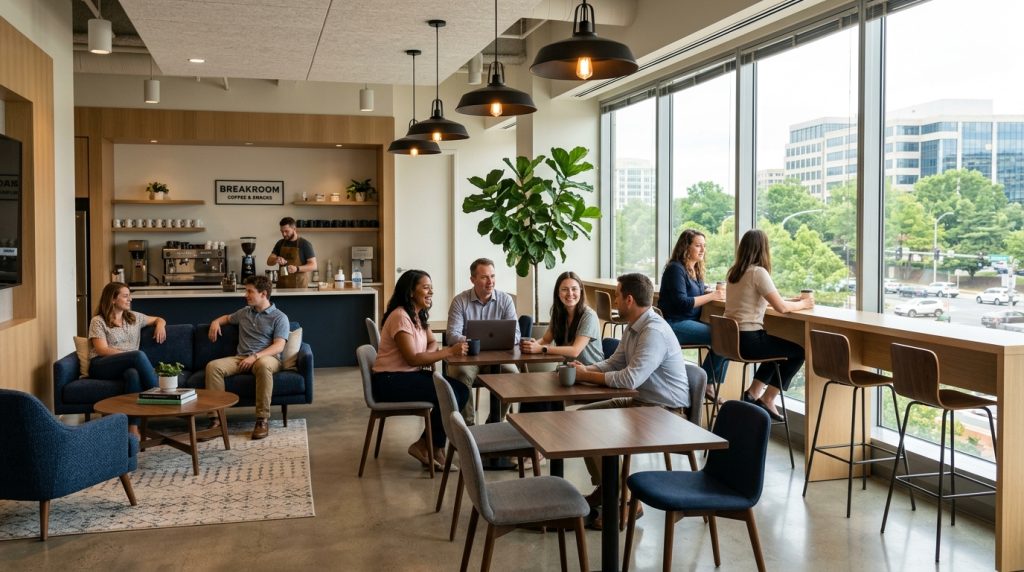
No defined zones. The best breakrooms have distinct functional areas — a dining zone, a lounge zone, maybe a small counter-height area for quick standing breaks. When everything blurs together, the space feels chaotic and uncomfortable.
Furniture that looks like it came from a surplus sale. Mismatched chairs, scratched laminate tables, and worn upholstery send a clear message about how much the company values employee comfort. It’s not about spending a fortune — it’s about being intentional.
Ignoring acoustics and lighting. Harsh overhead lighting and hard surfaces that bounce sound around make a breakroom feel stressful rather than restorative. Warmer lighting and soft furnishings make a significant difference in how the space feels.
Furniture That Actually Works in Breakrooms
Getting breakroom furniture right means thinking about flexibility, durability, and comfort — in that order. Here are the furniture categories that deliver the most impact:
Cafe tables and chairs. The workhorse of any breakroom, cafe-height tables (28–30 inches) with stackable or easy-to-move chairs give you flexibility. Choose chairs with padded seats if your employees tend to linger — comfort matters more than aesthetics alone.
Bar-height counters and stools. Counter-height seating (36–42 inches) along a wall or island creates an informal standing-friendly zone that’s perfect for quick meals or casual conversation. Bar stools with footrests are more comfortable than people expect, and they encourage the kind of brief, energizing break that actually sends people back to their desks refreshed.
Lounge seating. Soft seating — sofas, armchairs, lounge chairs — transforms a breakroom from a cafeteria into a genuine respite. You don’t need to furnish the whole room this way; even a small lounge cluster in a corner gives employees a place to truly decompress. This is also where standing desk users who spend most of their day on their feet particularly appreciate a soft landing during breaks.
Modular and collaborative seating. Banquette-style bench seating along a wall, sectional pieces, or modular lounge units make it easy to accommodate different group sizes without rearranging the whole room.
Storage and utility furniture. Lockers, cubby units, and small storage benches reduce clutter and give employees a place to keep personal items, reusable containers, or lunch bags — details that add up to a more pleasant environment.
Designing for Zones: The Strategy Behind Great Breakrooms
The most effective breakroom layouts divide the space into distinct functional zones, even in smaller footprints. Think of it as three areas working together:
- The dining zone — traditional table-and-chair seating for meals, organized enough to feel intentional
- The lounge zone — soft seating for relaxation, informal conversation, or a quiet moment alone
- The counter zone — bar-height surfaces near kitchen appliances for quick grabs, coffee conversations, and informal stand-up interactions
Even a 300-square-foot breakroom can accommodate all three if you plan the layout carefully. The key is avoiding the temptation to fill every square foot with tables and chairs — negative space and circulation room matter.
How All Business Systems Helps Northern Virginia Companies Get It Right
At All Business Systems, we work with businesses throughout Northern Virginia and the Washington DC metro area to design and furnish office spaces that employees actually want to use — including breakrooms and kitchen areas that are too often overlooked.
We carry a full range of cafe furniture, lounge seating, modular pieces, and bar-height solutions from manufacturers that balance quality and value. More importantly, we understand the local market: the mix of government contractors, tech firms, professional services companies, and small businesses that make Northern Virginia’s workforce what it is. We know what your employees expect, and we know how to help you deliver it within a realistic budget.
Whether you’re furnishing a breakroom from scratch, refreshing a space that’s past its prime, or reconfiguring your entire office layout, we bring the expertise to make it work.
Ready to upgrade your office furniture? Contact us at All Business Systems for expert advice and top-quality solutions.