
Defense Contractor Office Design: Balancing Security, Clearance, and Comfort
Defense Work Creates Unique Office Design Requirements
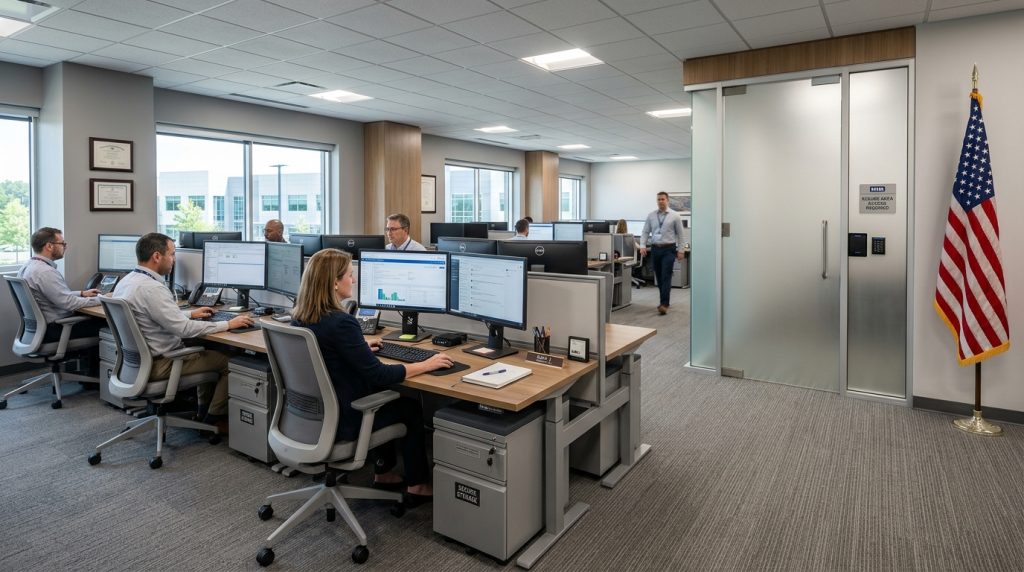
Defense contractors operating in Northern Virginia face office design challenges that commercial businesses do not. Cleared facilities, access control requirements, and the physical separation of classified and unclassified work areas impose constraints that standard office furniture configurations cannot accommodate without deliberate planning. Getting these decisions right affects both compliance and the daily productivity of cleared personnel.
Physical Separation Between Cleared and Unclassified Areas
Many defense contractor offices support both cleared and unclassified work within the same building or floor. Furniture layout and room configuration contribute to the physical access control that separates these areas. Workstation arrangements, partition heights, and furniture placement that creates clear boundaries between zones support the access control measures that facility security officers require. Furniture that was not selected with these distinctions in mind creates ambiguity that compliance reviews will flag.
Clean Desk Policies Require Adequate, Accessible Storage
Classified environments typically enforce clean desk policies that require all materials to be secured when workstations are unoccupied. Workstations without sufficient secure storage create compliance problems as employees accumulate materials with nowhere to put them. Desks with integrated locking storage and dedicated secure filing within reach of each workstation support clean desk compliance without requiring employees to leave their area to store materials.
Visitor and Uncleared Personnel Management
Defense contractor facilities receive uncleared visitors — vendor representatives, administrative contractors, and support personnel — who require escorted access to certain areas. Reception and waiting area furniture positioned outside secure perimeters keeps uncleared individuals in appropriate spaces without requiring constant active management. The physical environment does part of the access control work when furniture and layout are configured deliberately.
Durability for High-Utilization Government Contract Environments
Defense contractor offices often operate on extended hours with multiple shifts, particularly during contract performance periods with tight deliverable schedules. Commercial-grade seating and workstations built for high-utilization environments hold up to this use without the visible wear that would require replacement mid-contract. Government clients visiting contractor facilities notice the condition of the work environment and factor it into their assessment of how the contractor manages resources.
Conference Rooms That Support Sensitive Discussions
Program reviews, proposal preparation sessions, and classified briefings require conference rooms that provide acoustic and visual privacy. Conference room furniture arrangement that positions participants away from windows and doors, combined with rooms that can be secured when sensitive discussions are underway, supports the operational security practices that classified programs require.
Designing Compliant Workspaces That Support Mission-Focused Teams
Defense contractors who invest in well-designed, compliant office environments support both the security requirements of their programs and the productivity of the cleared personnel executing them. The physical workspace is a component of program performance, not a peripheral concern.
Ready to design a defense contractor office that meets security requirements without sacrificing functionality? Contact us at All Business Systems for office furniture solutions tailored to cleared and defense contractor environments in Northern Virginia.