
Furnishing a Coworking or Flex Space: Durability and Flexibility at Scale
Shared Space Puts Furniture to the Test
Coworking and flex space runs on turnover. Dozens or hundreds of members cycle through the same desks, chairs, and lounge areas every week, each with different habits and expectations. For operators and landlords running shared workspace across Northern Virginia and Washington DC, furniture is not a one-time purchase — it is infrastructure that has to survive constant use and reconfigure on demand.
Choosing pieces built for that reality is what keeps a flex space profitable, professional, and easy to run.
Durability Is the First Requirement
In a shared environment, furniture takes abuse no single-tenant office ever sees. Chairs get adjusted a dozen times a day, desks host a rotating cast of laptops and coffee cups, and lounge seating never rests. Commercial-grade construction, high wear-rating fabrics, and reinforced frames are not optional here — they are what separate furniture that lasts five years from furniture that looks tired in twelve months. Every early replacement eats directly into margins.
Reconfiguration Keeps Space Earning
Flex space has to change with demand: a room of individual desks one week, an event layout the next, a team suite after that. Modular desking, mobile tables, and movable seating let staff reshape a floor in minutes without ordering new furniture. That agility is the whole value proposition of flex space, and furniture that moves easily is what makes it deliverable at scale.
Supporting Hot-Desking and Member Variety
Hot-desking only works when any member can sit at any station and be comfortable immediately. That means highly adjustable task chairs that fit a wide range of body types, clean desks with accessible power, and a consistent standard across the floor so no seat feels like the bad one. Serving a varied membership — freelancers, small teams, visiting staff — depends on furniture that adapts to the person rather than the other way around.
Zones for Different Kinds of Work
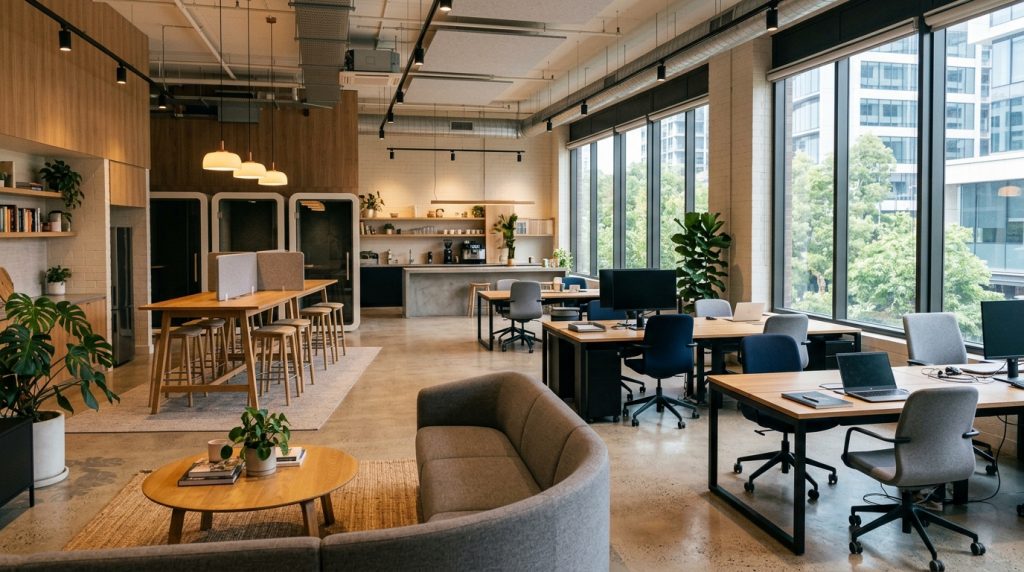
Members expect options: quiet focus areas, collaborative tables, phone and video nooks, and casual lounge zones for informal work. A well-zoned floor lets people choose the setting that fits their task, which raises satisfaction and retention. Furniture defines these zones — soft seating and rugs signal lounge, height-adjustable tables signal collaboration, and enclosed pods signal focus — without the cost of building walls.
A Consistent Look That Reads as Professional
Members judge a flex space partly on how it looks and feels, and a cohesive furniture standard signals a well-managed operation. Consistent finishes and quality pieces across the floor build the kind of professional atmosphere that justifies membership rates and attracts the companies operators want. Cohesion also simplifies restocking and replacement, since standardized furniture is easier to source and match over time.
Furnishing Flex Space That Performs
Durable, flexible, professional furniture is the backbone of a shared workspace that fills up and stays full. Ready to furnish a coworking or flex space built to handle real turnover? Contact us at All Business Systems for durable, reconfigurable furniture that scales with your DC metro operation.