
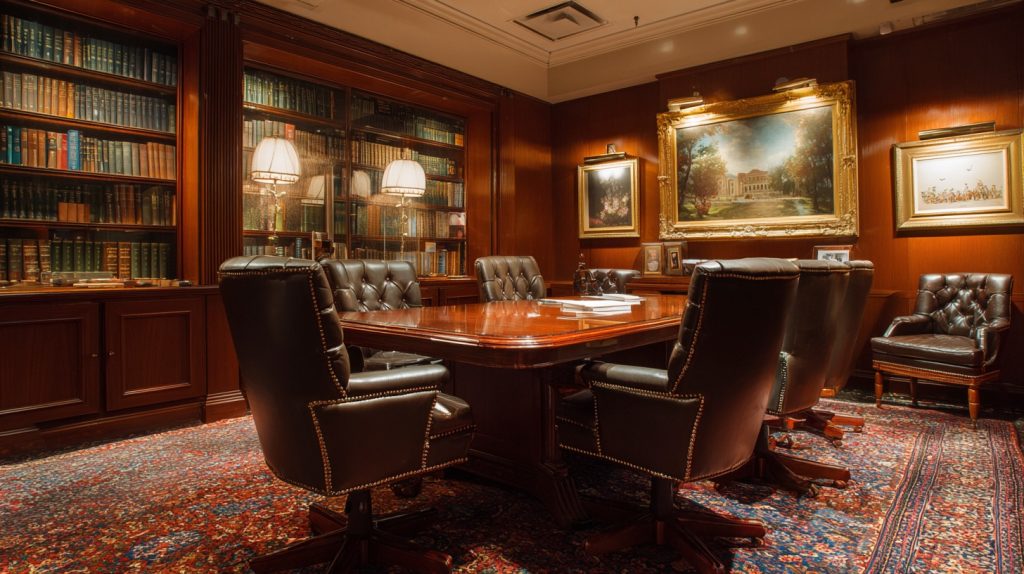
Legal and Financial Offices: Furniture That Conveys Trust and Confidentiality
The Psychology of Professional Trust
Legal and financial service firms operate in environments where client trust directly impacts business success. Furniture selection in these offices serves as a powerful communication tool, conveying expertise, discretion, and reliability before any conversation begins. Clients making significant legal or financial decisions need environmental cues that reinforce their confidence in professional competence.
Research in environmental psychology demonstrates that office design influences client perceptions of professional credibility within the first few minutes of a visit. Well-chosen furniture contributes to the psychological comfort necessary for clients to share sensitive information and make important decisions.
Consultation Room Design Principles
Consultation rooms require furniture that facilitates sensitive conversations while maintaining professional boundaries. Round or oval tables eliminate hierarchical seating arrangements, encouraging collaborative discussion while providing adequate surface area for documents and materials.
Seating selection balances comfort with formality. Clients need to feel physically comfortable during lengthy consultations, but overly casual furniture can undermine the gravity of important legal or financial discussions. Mid-back chairs with moderate cushioning typically achieve this balance effectively.
Privacy considerations extend beyond soundproofing to visual privacy. Furniture placement should ensure confidential documents aren’t visible to others entering or passing the room. Consider sight lines and document security when arranging consultation furniture.
For consultation areas where professionals alternate between sitting and standing presentations, All Business Systems’ standing desks provide the flexibility needed for dynamic client interactions while maintaining professional appearance.
Waiting Area Psychology
Waiting areas in professional service firms serve multiple psychological functions beyond simple seating. The furniture choices communicate organizational values, help manage client anxiety, and set expectations for the professional interaction to follow.
Seating arrangements should accommodate different client preferences and group sizes. Some clients prefer privacy while waiting, while others find comfort in open, observable spaces. Providing options through varied seating clusters addresses different psychological needs.
Material selections in waiting areas should convey stability and quality. Natural materials like wood and leather suggest permanence and tradition, while modern materials can communicate innovation and forward-thinking approaches. The choice should align with the firm’s positioning and client expectations.
Supporting Sensitive Conversations
Furniture in professional service environments must facilitate discussions about personal finances, legal troubles, estate planning, and other sensitive topics. The physical environment should minimize distractions and psychological barriers to open communication.
Acoustic privacy becomes crucial for sensitive discussions. Furniture with sound-absorbing properties, strategic placement to minimize sound transmission, and materials that don’t amplify voices contribute to confidentiality requirements.
Document security considerations influence furniture selection throughout legal and financial offices. Surfaces that resist staining from spilled coffee, storage solutions with locking mechanisms, and furniture arrangements that prevent inadvertent document viewing protect client confidentiality.
Balancing Tradition with Innovation
Professional service firms must balance traditional symbols of stability with contemporary efficiency. Clients often expect some traditional elements that communicate established expertise, while also valuing modern conveniences and technological integration.
Technology integration in professional furniture has become essential for modern practice. Furniture must accommodate laptops, tablets, charging stations, and video conferencing equipment without compromising the professional atmosphere or client comfort.
Flexibility in furniture arrangements allows firms to adapt spaces for different types of client meetings. Estate planning sessions require different setups than business consultations, and furniture that can be easily reconfigured supports diverse professional services.
Communicating Expertise Through Design
Every furniture choice in professional service offices contributes to the overall impression of competence and attention to detail. Clients extrapolate from physical environment to professional capabilities, making design decisions crucial for business development.
Quality indicators should be evident but not ostentatious. Well-constructed furniture with attention to detail suggests similar care in professional work, while overly expensive or flashy pieces might suggest poor judgment or inflated fees.
Consistency in design choices throughout the office reinforces professional credibility. Mixed styles or quality levels can create uncertainty about the firm’s attention to detail and organizational capabilities.
Ready to enhance your professional service environment? Contact us at All Business Systems for expert guidance on furniture solutions that build client trust and support confidential communications.