
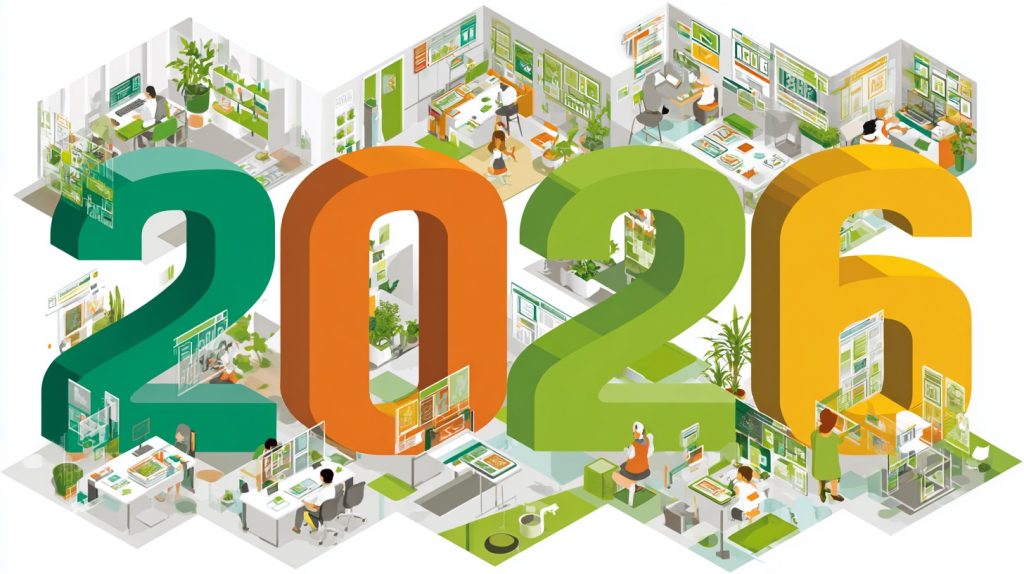
2026 Office Design Trends: What Northern Virginia Businesses Need to Know
Staying Competitive Through Strategic Design
Office design trends influence more than aesthetics—they shape employee satisfaction, productivity, recruitment success, and client perceptions. For Northern Virginia businesses competing for top talent in the Washington DC metro area’s tight labor market, understanding and selectively adopting relevant design trends can deliver competitive advantages.
As we approach 2026, several major design movements are reshaping commercial workspaces. Not every trend deserves adoption, but understanding which innovations align with your business goals helps you make informed furniture and design investments that support success.
Biophilic Design: Bringing Nature Indoors
Biophilic design—integrating natural elements into built environments—continues gaining momentum as research confirms its positive impacts on employee wellbeing, stress reduction, and productivity.
This trend manifests through multiple approaches: living plant walls, abundant natural light, natural materials like wood and stone, nature-inspired color palettes, and furniture arrangements that provide views of outdoor spaces.
For DMV area businesses, biophilic design offers practical benefits beyond aesthetics. Studies show offices incorporating natural elements experience reduced employee stress levels, improved air quality, enhanced creativity, and increased job satisfaction—all factors that impact retention in competitive markets.
Implementing biophilic design doesn’t require massive renovations. Strategic furniture selections featuring natural wood finishes, incorporating plants throughout workspaces, maximizing natural light through furniture placement, and choosing nature-inspired color schemes all contribute to biophilic environments without substantial costs.
Adaptive Furniture for Hybrid Work Models
Hybrid work arrangements—combining remote and in-office work—remain dominant throughout Northern Virginia. This reality drives demand for adaptive furniture that accommodates fluctuating occupancy and varied work modes.
Height-adjustable standing desks lead this trend, offering flexibility for different users sharing workstations on rotating schedules. These versatile work surfaces accommodate various height preferences and work styles while promoting healthy posture variation throughout the day.
Modular seating systems allow easy reconfiguration from individual focus work to collaborative team sessions. Mobile furniture on casters enables rapid space transformation as needs change throughout the day or week.
Hoteling systems—where employees reserve workstations as needed rather than maintaining assigned desks—require furniture that adjusts quickly to different users. This approach maximizes space efficiency while accommodating hybrid schedules, though it requires careful implementation to maintain employee satisfaction.
Wellness-Centered Layouts
Employee wellness has evolved from nice-to-have perk to business imperative. Forward-thinking Washington DC area companies are redesigning workspaces specifically to support physical and mental health.
This trend emphasizes ergonomic furniture as standard rather than premium upgrades, ensuring all employees—not just executives—receive health-supporting seating and work surfaces. Quality ergonomic chairs, adjustable monitors, keyboard trays, and proper lighting become baseline requirements rather than optional amenities.
Wellness-centered design also incorporates movement encouragement through walking paths, standing meeting areas, and strategically distant amenities that require brief walks. These subtle design choices combat the health risks of sedentary work without requiring gym memberships or formal wellness programs.
Quiet zones for focused work, separate from collaborative areas, address mental wellness by giving employees control over their acoustic environment. This separation recognizes that productivity requires both collaboration and concentration, with different spaces optimized for each mode.
Technology Integration in Modern Furniture
Seamless technology integration continues advancing from luxury feature to essential functionality as work becomes increasingly digital.
Furniture with integrated power and USB charging eliminates cable clutter while ensuring devices stay charged throughout the workday. Conference tables with built-in connectivity hubs simplify meetings by providing easy access to power, data, and display connections.
Adjustable monitor arms with cable management systems keep technology accessible yet organized. Wireless charging surfaces built into desks and tables eliminate cable dependency entirely for compatible devices.
For Northern Virginia businesses, particularly government contractors and technology companies, integrated technology solutions support the connected, mobile work styles employees expect while maintaining professional aesthetics that impress clients.
Which Trends Deserve Investment?
Not every trend warrants adoption. Smart businesses evaluate which movements align with their specific needs, employee preferences, and budget realities.
Trends worth prioritizing for most businesses:
- Ergonomic furniture that protects employee health and productivity
- Flexible, adaptable systems that accommodate changing needs
- Quality construction ensuring long-term value
- Technology integration supporting modern work styles
- Acoustic solutions addressing open-office noise challenges
Trends to approach cautiously:
- Extreme open-office layouts that sacrifice all privacy
- Highly trendy aesthetics that date quickly
- Complex technology systems requiring extensive maintenance
- Radical furniture concepts lacking proven ergonomic benefits
- Instagram-worthy designs prioritizing appearance over function
All Business Systems helps DMV area businesses distinguish between valuable innovations and passing fads. Our experience across hundreds of office installations reveals which trends deliver lasting value and which represent expensive mistakes.
Sustainable Materials and Practices
Environmental responsibility influences design decisions as businesses recognize both ethical imperatives and practical benefits of sustainable furniture choices.
Recycled and renewable materials—from recycled aluminum frames to sustainably harvested wood—reduce environmental impact without compromising quality or durability. Many manufacturers now offer extensive lines featuring eco-friendly materials that meet or exceed conventional furniture performance.
Low-VOC finishes and fabrics improve indoor air quality while supporting employee health. For businesses pursuing LEED certification or similar environmental standards, sustainable furniture selections contribute toward certification requirements.
Durability itself represents sustainability. Quality furniture lasting 10-15 years generates far less environmental impact than cheap pieces requiring replacement every 2-3 years. This longevity delivers both environmental and financial benefits.
Implementing Trends Strategically
Successful trend adoption requires strategic implementation that aligns with your specific business context rather than blindly following every new movement.
Start by assessing your particular challenges and opportunities. Does your team struggle with collaboration, focus, recruitment, or health issues? Different trends address different problems—match solutions to your actual needs.
Pilot new approaches before wholesale adoption. Test standing desks with a small group, implement one biophilic zone, or try hoteling in a single department. Gather feedback, measure results, and refine based on real-world experience.
Phase implementations to spread costs over time while building on lessons learned. This incremental approach prevents costly mistakes while allowing course corrections as you discover what works for your particular workplace culture.
Local Expertise for Trend Navigation
Navigating design trends successfully requires understanding both broader movements and local market conditions. Northern Virginia businesses face unique challenges—from competitive talent markets to space constraints in urban locations—that influence which trends deliver value.
All Business Systems combines broad industry knowledge with deep understanding of DMV area business needs. We’ve seen which trends succeed in local markets, which require modification for regional preferences, and which prove disappointing in practice despite exciting theory.
This local expertise helps you avoid expensive experiments while confidently adopting innovations that support your success. Our team provides honest assessments of which trends align with your goals and which represent passing fads unlikely to justify their costs.
Ready to explore office design trends that support your business? Contact us at All Business Systems for expert guidance on strategic furniture investments.