
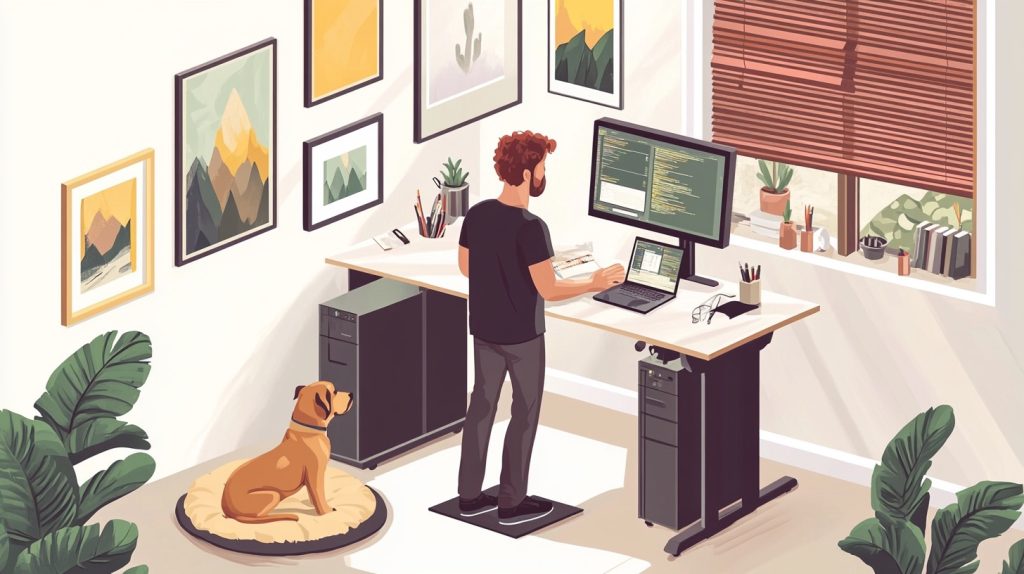
The Standing Desk Revolution: Health Benefits and Productivity Gains Explained
Understanding the Science Behind Sit-Stand Workstations
The transition from traditional fixed-height desks to adjustable standing desks represents one of the most significant workplace health innovations in recent decades. For Northern Virginia businesses seeking to improve employee wellbeing while boosting productivity, understanding the research behind sit-stand workstations reveals why this investment delivers exceptional returns.
Standing desks aren’t a fad or trendy gimmick—they’re evidence-based solutions to serious health problems created by prolonged sitting. Extensive research demonstrates that alternating between sitting and standing throughout the workday delivers measurable improvements in employee health, energy levels, focus, and overall productivity.
The Health Risks of Prolonged Sitting
Before exploring standing desk benefits, it’s important to understand the health challenges they address. Modern office workers typically sit 8-12 hours daily—commuting, working at desks, attending meetings, and relaxing at home. This sedentary lifestyle generates serious health consequences.
Research links prolonged sitting to increased risks of cardiovascular disease, type 2 diabetes, certain cancers, and premature mortality. Even regular exercise doesn’t fully counteract the negative effects of sitting for extended periods—a finding that surprised many health researchers.
Beyond these serious long-term risks, excessive sitting causes immediate problems: lower back pain, poor posture, reduced circulation, decreased energy, and lower metabolic rates. For Washington DC area businesses, these issues translate directly into reduced productivity, increased absenteeism, and higher healthcare costs.
Standing desks address these challenges by enabling position variety throughout the workday. Rather than sitting continuously for 8 hours, employees can alternate between sitting and standing based on their tasks, energy levels, and comfort preferences.
Documented Health Benefits of Standing Desks
Numerous peer-reviewed studies document the health improvements employees experience when using height-adjustable workstations.
Reduced back and neck pain: Studies show standing desk users report 32-54% reduction in upper back and neck pain after just weeks of use. For DMV area businesses where computer work dominates, this improvement significantly impacts employee comfort and productivity.
Improved circulation: Alternating positions throughout the day enhances blood flow, reducing the leg swelling, numbness, and discomfort associated with prolonged sitting. Better circulation also improves alertness and cognitive function.
Lower blood sugar levels: Research indicates standing after meals reduces blood sugar spikes by 43% compared to sitting. This benefit proves particularly valuable for employees at risk for diabetes or metabolic syndrome.
Reduced cardiovascular disease risk: Studies suggest that standing for just 2-3 additional hours daily can reduce cardiovascular disease risk factors comparable to running 10 marathons per year—a remarkable finding that highlights standing’s cardiovascular benefits.
Increased calorie burn: While not a replacement for exercise, standing burns approximately 50 more calories per hour than sitting. Over a full workday, this difference adds up to meaningful metabolic benefits.
Productivity and Performance Improvements
Beyond health benefits, standing desks deliver measurable productivity gains that justify their cost through improved work output and employee engagement.
Research from Texas A&M found call center employees using standing desks were 46% more productive than colleagues using traditional seated workstations. This dramatic improvement stemmed from increased energy, better focus, and enhanced engagement when employees could vary their positions.
Standing promotes alertness and cognitive function. Many users report improved concentration and mental clarity when standing, particularly during afternoon periods when energy typically dips. For Northern Virginia businesses where knowledge work predominates, these cognitive benefits directly impact output quality.
Position variety also combats fatigue. The ability to shift between sitting and standing prevents the physical discomfort that distracts from work tasks. Rather than focusing on back pain or stiff legs, employees can concentrate fully on their responsibilities.
Collaborative work benefits particularly from standing options. Standing meetings typically proceed more efficiently, with increased energy and engagement compared to seated conferences. Many companies report 25-30% shorter meetings when participants stand.
Addressing Common Standing Desk Concerns
Despite clear benefits, some businesses hesitate to invest in standing desks due to misconceptions about implementation challenges.
“Won’t employees get tired from standing all day?” Standing desks aren’t meant for continuous standing. The goal is position variety—alternating between sitting and standing based on comfort and task requirements. Most experts recommend starting with 15-30 minute standing intervals, gradually increasing as employees adapt.
“Are standing desks expensive?” Quality adjustable desks represent moderate investments that deliver exceptional ROI through health improvements and productivity gains. All Business Systems offers standing desks at various price points, ensuring businesses can find options fitting their budgets while meeting ergonomic requirements.
“Will employees actually use them?” When properly introduced with guidance on optimal use patterns, standing desk adoption rates exceed 90%. Employees quickly appreciate the flexibility and health benefits, making regular position changes a natural part of their workflow.
“Do we need special accessories?” While anti-fatigue mats enhance standing comfort, they’re not strictly necessary. Most standing desk users find the desks themselves sufficient, though mats represent inexpensive additions that improve the standing experience.
Choosing the Right Standing Desks for Your Workplace
Not all standing desks deliver equal performance or value. Several factors distinguish quality options from inferior alternatives.
Adjustment mechanism: Electric height adjustment provides smooth, easy transitions that encourage regular position changes. Manual crank systems save money but create friction that reduces usage frequency. Pneumatic systems offer middle-ground solutions.
Height range: Quality desks accommodate users from 5’0″ to 6’5″ in both sitting and standing positions. Inadequate ranges force some employees to compromise posture, negating ergonomic benefits.
Stability: Desks must remain stable at all heights, including maximum extension. Wobbly surfaces frustrate users and potentially damage equipment. Testing stability before purchasing prevents expensive mistakes.
Weight capacity: Ensure desks support your employees’ equipment loads—multiple monitors, laptops, reference materials, and personal items. Inadequate capacity creates safety hazards and limits functionality.
Adjustment speed: Faster height transitions encourage more frequent position changes. Desks requiring 30+ seconds to adjust see lower usage than those completing transitions in 10-15 seconds.
All Business Systems helps DMV area businesses select standing desks matching their specific needs, budgets, and employee requirements. Our experience across hundreds of installations reveals which models deliver lasting value and which create ongoing frustrations.
Implementation Strategies for Success
Successful standing desk adoption requires more than simply purchasing equipment. Strategic implementation ensures employees use their desks effectively and experience maximum benefits.
Provide usage guidance. Many employees unfamiliar with standing desks aren’t sure how to use them optimally. Simple guidelines—start with short standing intervals, listen to your body, alternate based on tasks—help employees develop healthy usage patterns.
Lead by example. When executives and managers use standing desks regularly, employees feel more comfortable adopting them. Leadership demonstration signals that position variety is valued and encouraged.
Allow adjustment periods. Bodies need time adapting to new movement patterns. Employees may experience temporary leg or foot fatigue as muscles adjust to increased standing. This discomfort typically resolves within 2-3 weeks.
Encourage experimentation. Different employees discover different preferences—some stand during phone calls, others while reading, still others during creative work. Supporting individual approaches rather than mandating specific patterns maximizes adoption.
ROI: Justifying Standing Desk Investments
For Northern Virginia businesses evaluating standing desk investments, return calculations reveal compelling financial justifications beyond health improvements.
Productivity gains alone often justify costs within 6-12 months. Using conservative estimates of 10% productivity improvement (well below documented 46% increases), a $50,000 employee generating 10% more value creates $5,000 additional annual output. A $600 standing desk pays for itself in 1.5 months through productivity alone.
Healthcare cost reductions provide additional returns. Businesses report decreased back pain claims, fewer sick days, and lower insurance premiums when implementing standing desk programs. These savings compound over time as employees experience sustained health improvements.
Recruitment and retention benefits also factor into ROI. In competitive labor markets like Washington DC, offering standing desks demonstrates commitment to employee wellbeing—a differentiator that influences both recruitment success and retention rates.
The Future of Workplace Ergonomics
Standing desks represent just one component of comprehensive ergonomic workplace design, but they’re foundational pieces that enable numerous other improvements.
As understanding of workplace health evolves, standing desks are becoming standard rather than premium features. Forward-thinking companies throughout the DMV area now provide adjustable workstations for all employees, recognizing that health-supporting furniture isn’t a perk but a business necessity.
The data is clear: standing desks improve health, boost productivity, enhance employee satisfaction, and deliver measurable returns on investment. For Northern Virginia businesses committed to employee wellbeing and performance optimization, height-adjustable workstations represent strategic investments rather than optional amenities.
Ready to explore standing desk options for your team? Contact us at All Business Systems for expert guidance on implementing health-supporting workstations.