
ADA-Compliant Office Furniture: What Northern Virginia Businesses Need to Know
Why ADA Compliance Matters in Your Office
The Americans with Disabilities Act has been the law of the land since 1990, yet many businesses in Northern Virginia and the Washington DC metro area are still unknowingly operating offices that fall short of ADA accessibility standards. For employers, that’s not just a legal risk — it’s a missed opportunity to build a truly inclusive workplace where every employee and visitor can move through the space with confidence and dignity.
Whether you’re outfitting a new office in Tysons, Reston, or Alexandria, or upgrading an existing space in the DC metro corridor, understanding what ADA compliance looks like at the furniture level is essential. Here’s what you need to know.
Aisle Widths and Circulation Space
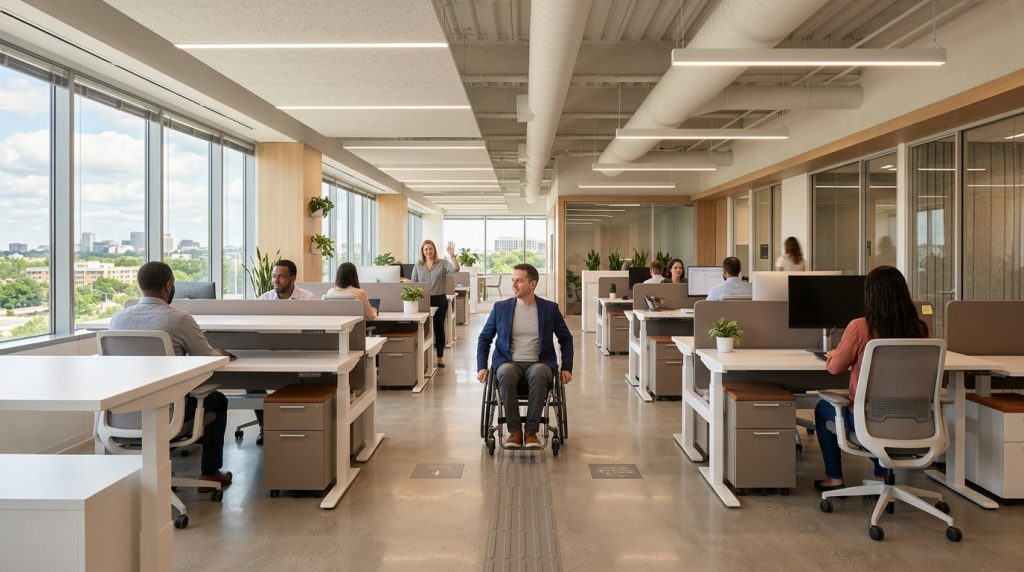
One of the most common ADA oversights in office environments is inadequate aisle and pathway clearance. The ADA requires that accessible routes through a workspace provide a minimum clear width of 36 inches. However, for areas where two wheelchair users might pass each other — such as main corridors or shared common areas — 60 inches of clearance is recommended.
When planning your office furniture layout, this means being intentional about the placement of workstations, filing cabinets, storage units, and any freestanding furniture. A workspace that looks spacious on a floor plan can quickly become a maze of obstacles once desks, chairs, and accessories are in place. Always account for the full footprint of each piece, including chair clearance when someone is seated and pushed back from their desk.
Desk Heights and Work Surface Accessibility
ADA guidelines specify that accessible work surfaces should be between 28 and 34 inches from the floor, with knee clearance of at least 27 inches high, 30 inches wide, and 19 inches deep to accommodate wheelchair users. Standard fixed-height desks often miss this mark entirely.
This is where height-adjustable desks become not just a wellness feature but a compliance asset. All Business Systems’ sit-and-standing desks allow you to configure precise height settings that meet ADA requirements while also supporting the ergonomic needs of all employees — whether seated in a standard chair, a wheelchair, or standing. Investing in adjustable desks is one of the smartest moves a Northern Virginia business can make when building an accessible, future-ready workspace.
Mobility Aid Clearances at Workstations
Beyond the desk itself, the workstation area needs to accommodate the turning radius of a wheelchair, which the ADA defines as a 60-inch diameter clear floor space. This applies not just to individual workstations but also to reception areas, conference rooms, breakrooms, and any shared workspace.
Furniture configurations that work well for ambulatory employees — like tight L-shaped desk clusters or cubicle arrangements with narrow entries — can be problematic for employees who use wheelchairs, walkers, or other mobility aids. When selecting office furniture, look for modular systems that can be reconfigured to maintain clear approach and turning zones without sacrificing overall workspace density.
Reception Areas, Conference Rooms, and Shared Spaces
ADA compliance extends well beyond individual workstations. Reception desks should include a lowered section no higher than 36 inches for accessible check-in. Conference tables should have accessible seating positions with appropriate knee clearance, and at least one accessible path to those seats must be maintained at all times.
In open-plan offices, collaborative zones and lounge areas are often afterthoughts when it comes to accessibility. Low coffee tables, poufs, and asymmetrical seating arrangements may look sharp but can exclude employees and guests who need specific types of support. Prioritizing furniture that works for a range of physical needs in these shared spaces signals that inclusion is a value baked into your culture — not an afterthought.
The Legal Side: What Businesses Need to Know
Under Title III of the ADA, places of public accommodation — including many commercial offices — are required to remove architectural and furniture barriers where it is “readily achievable.” For employers with 15 or more employees, Title I also requires reasonable accommodations for employees with disabilities, which can directly involve furniture and workspace configuration.
Non-compliance can result in complaints filed with the Equal Employment Opportunity Commission (EEOC) or the Department of Justice, civil litigation, and reputational damage. In the competitive Northern Virginia and DC metro business environment, where top talent and federal contractors operate side by side, accessibility is increasingly a baseline expectation — not a bonus feature.
Practical Steps for Northern Virginia Businesses
Getting your office to a strong ADA footing doesn’t require a full renovation. Start with a walkthrough audit: measure your aisle widths, assess desk heights, and look critically at mobility clearances in every work area. From there, targeted furniture upgrades — height-adjustable desks, modular workstations with reconfigurable layouts, accessible reception counters — can bring your space into compliance while also modernizing your overall office environment.
Working with a knowledgeable local furniture partner who understands both ADA standards and the specific needs of Northern Virginia workplaces makes the process significantly smoother.
Ready to upgrade your office furniture? Contact us at All Business Systems for expert advice and top-quality solutions.