
Collaborative Neighborhoods: Zoning Your Office Floor Plan With Intentional Furniture
Why Office Neighborhoods Are Replacing the Open Floor Plan
The open office concept promised collaboration and transparency, but many businesses across Northern Virginia and the Washington DC metro area have learned the hard way that a wide-open floor plan often delivers more noise and distraction than productive teamwork. The solution gaining traction among forward-thinking companies is not a return to private offices or cubicle farms. Instead, it is something far more strategic: collaborative neighborhoods.
A collaborative neighborhood is a purposefully designed zone within your office that supports a specific type of work. Think of your floor plan as a small city. Just as a city has residential streets, commercial districts, and public parks, your office can have quiet focus zones, active brainstorming areas, casual social hubs, and structured meeting spaces. The key to making this work is intentional furniture selection and placement.
Defining Your Office Zones With Furniture
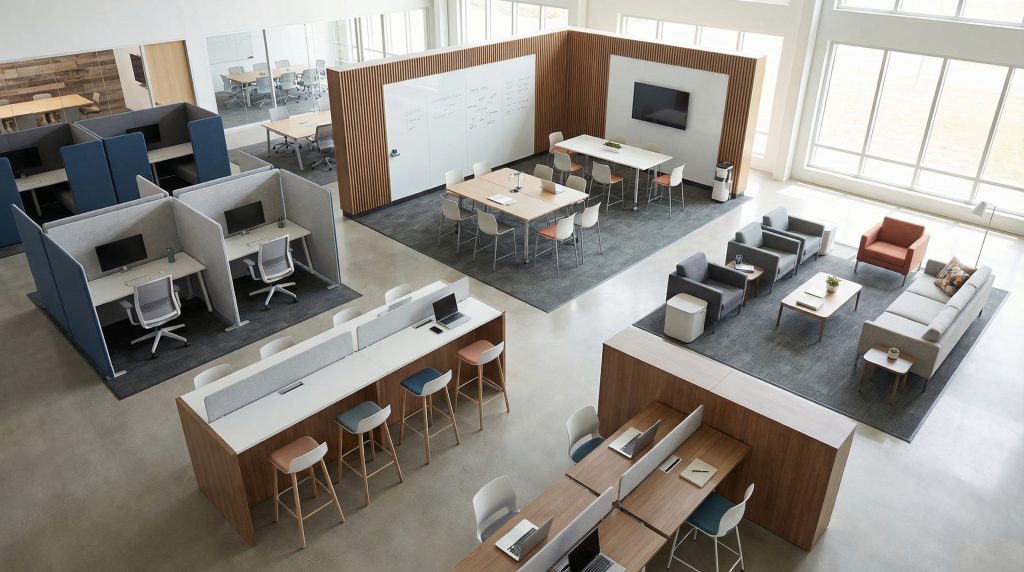
You do not need walls to create boundaries. Furniture itself can act as the architecture that separates one neighborhood from another. Here are the core zones most offices benefit from and the furniture strategies that bring them to life:
- Focus Zones: These are quiet areas for heads-down, concentrated work. Use high-back lounge chairs, acoustic panels attached to desks, and individual workstations with privacy screens. Position these zones away from high-traffic corridors and communal areas.
- Collaboration Hubs: Outfit these areas with modular tables that can be rearranged for different group sizes, mobile whiteboards, and comfortable seating that encourages people to linger and ideate. Soft seating mixed with standing-height tables gives teams the flexibility to shift postures throughout a working session.
- Social and Lounge Areas: A well-placed sofa grouping, a cafe-height table with stools, or a coffee bar setup signals that a space is meant for informal conversation and relationship building. These zones are critical for company culture, especially in hybrid workplaces where in-office days need to deliver genuine human connection.
- Heads-Down Team Zones: For departments that need to sit together but still require individual concentration, benching systems with integrated storage and subtle desk dividers strike the right balance between openness and personal space.
Using Height and Orientation as Natural Dividers
One of the most effective and underutilized strategies is varying furniture height to create visual and psychological boundaries. A row of shelving units at standing height can separate a collaboration hub from a focus zone without blocking light or making the space feel closed off. Similarly, positioning desks at different orientations rather than uniform rows breaks the monotony and naturally groups people into neighborhoods.
Quality sit-to-stand desks serve double duty in this approach. They give individual employees the ergonomic benefit of alternating between sitting and standing throughout the day, and a cluster of standing desks at full height can act as a subtle visual barrier that defines one zone from another. All Business Systems carries a wide selection of standing desks built for commercial durability and daily use.
Practical Tips for Northern Virginia and DC Metro Offices
Office space in the Northern Virginia and Washington DC metro area is not cheap, which makes smart zoning even more valuable. Here are a few practical considerations for businesses in this market:
- Maximize square footage with modular furniture. Pieces that can be reconfigured for different uses let you get more function out of less space. A neighborhood that serves as a training area in the morning can become a project workspace in the afternoon.
- Plan for hybrid schedules. Many DC-area companies operate on hybrid models. Your neighborhoods should accommodate fluctuating headcounts without feeling empty on light days or overcrowded on anchor days. Flexible furniture is the answer.
- Think acoustics, not just aesthetics. Furniture with built-in acoustic properties, such as high-back booths and upholstered panels, can dramatically reduce noise bleed between zones. This matters more than most people realize until they experience the difference firsthand.
- Consider traffic flow. Place your social and lounge neighborhoods near entrances and kitchens where foot traffic already exists naturally. Keep focus zones tucked into quieter corners of the floor plan. Let the furniture guide people intuitively to the right space for the right activity.
Start With a Floor Plan Consultation
Creating effective office neighborhoods is not about buying a collection of trendy furniture pieces. It is about understanding how your team actually works, what types of activities happen throughout the day, and then selecting and arranging furniture to support those activities intentionally. The difference between a well-zoned office and a cluttered one often comes down to expert planning.
All Business Systems has helped businesses throughout Northern Virginia and the greater Washington DC metro area transform their workspaces into productive, well-organized environments. Whether you are fitting out a new lease or rethinking your current layout, our team can walk your space, understand your workflow, and recommend furniture solutions that create real, functional neighborhoods.
Ready to create a smarter, more intentional office layout? Contact us at All Business Systems for a free consultation and let our team help you zone your workspace for maximum collaboration and productivity.