
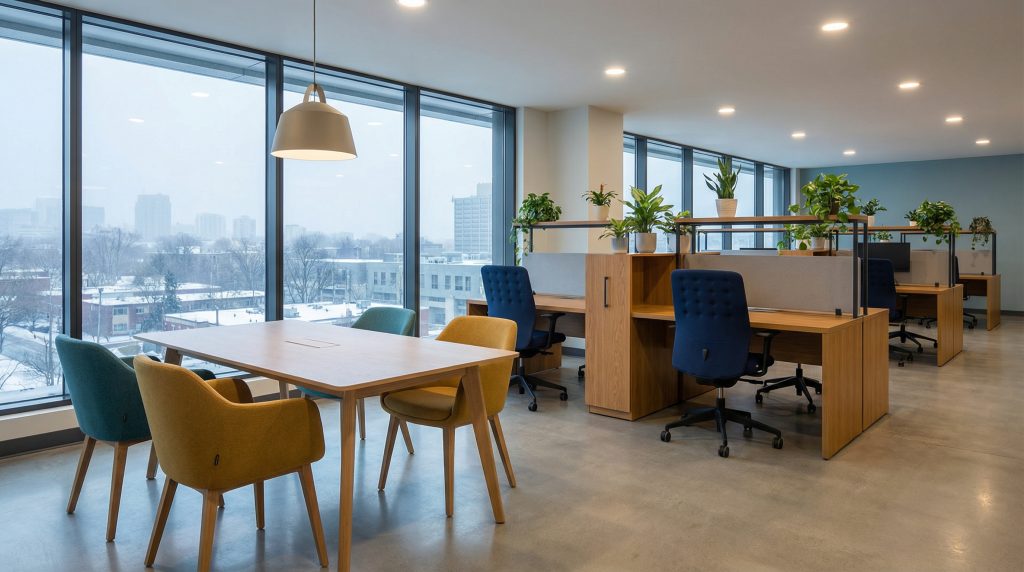
Color Psychology in Office Design: Energizing Your Space During the Gray Months
Why Color Matters More in Winter
If you have ever walked into your office on a dreary January morning and felt your energy immediately flatline, you are not imagining things. Here in the Northern Virginia and Washington DC metro area, the gray months from December through March can take a real toll on workplace morale. Overcast skies, shorter daylight hours, and muted landscapes outside the window all contribute to a subtle but measurable dip in focus and motivation.
The good news is that the colors inside your office can counteract what is happening outside. Color psychology, the study of how hues influence human behavior and emotion, has been applied in commercial design for decades. And when it comes to office furniture and interior choices, a few intentional decisions can transform a sluggish winter workspace into one that feels vibrant, focused, and welcoming.
The Science Behind Color and Productivity
Research consistently shows that color affects mood, cognitive performance, and even physical energy levels. Here is a quick breakdown of how key colors influence the workplace:
- Blue: Promotes calm focus and mental clarity. Ideal for environments where deep concentration and analytical thinking are priorities. Navy and mid-tone blues work especially well in conference rooms and private offices.
- Green: Reduces eye strain and creates a sense of balance. Green tones are excellent for spaces where employees spend long hours, as they evoke a natural, restorative quality.
- Yellow: Stimulates optimism and creativity. Used as an accent color in brainstorming areas or breakout spaces, yellow can lift spirits without overwhelming a room.
- Orange: Energizes and encourages social interaction. This is a strong choice for communal areas, kitchens, and collaborative zones where you want people to engage.
- Red: Increases urgency and physical energy. Best used sparingly as an accent, red can be effective in spaces where short bursts of high-intensity work happen.
- Neutral tones (gray, white, beige): Provide a clean backdrop but can feel sterile or depressing if overused, particularly during winter when the world outside is already muted.
The key takeaway is that an office dominated entirely by gray, white, and black during the darkest months of the year is working against your team rather than for them.
Practical Ways to Introduce Color Through Office Furniture
You do not need to repaint your entire office or commit to a radical redesign. Some of the most effective color interventions come through furniture selections and strategic accents. Here are practical approaches that work well for businesses across the DC metro area:
Task chairs and seating. Upgrading to ergonomic chairs in deeper blues, greens, or even bold accent colors is one of the fastest ways to inject life into a workspace. Modern office seating comes in a wide range of upholstery options that balance professionalism with visual warmth.
Desks and work surfaces. While most desks lean toward neutral finishes, consider warm wood tones or desks with colored accents to break up a monotone floor plan. Quality standing desks from All Business Systems are available in a variety of finishes that complement both modern and traditional office palettes, and the added benefit of sit-stand flexibility helps combat the physical sluggishness that winter often brings.
Lounge and breakout furniture. Collaborative seating areas are the perfect place to introduce bolder colors. A set of lounge chairs in a rich teal or warm mustard can turn an underused corner into a space people actually want to spend time in.
Storage and shelving. Colored filing cabinets, bookcases, and modular storage units are an underrated design tool. Swapping a row of gray metal cabinets for units in navy, forest green, or warm terracotta can quietly shift the entire mood of a room.
A Balanced Approach for Professional Environments
Of course, most businesses in the Northern Virginia and DC area need to maintain a polished, professional appearance. The goal is not to turn your office into a playground. Instead, aim for the 60-30-10 rule commonly used in interior design:
- 60% dominant neutral color for walls, large furniture pieces, and flooring
- 30% secondary color introduced through office furniture, partitions, and textiles
- 10% accent color for smaller items like chair upholstery, accessories, and decorative elements
This ratio keeps the space feeling cohesive and professional while still delivering the psychological benefits of color. Even small shifts, like replacing all-black task chairs with charcoal-and-blue options, can make a noticeable difference in how your team feels during the long stretch between New Year’s and spring.
Let Your Office Work for Your Team This Winter
The environment your team works in directly affects their output, their mood, and their willingness to show up engaged every day. During the gray months, your office design choices matter even more. Thoughtful color integration through furniture and layout is one of the most cost-effective investments you can make in workplace satisfaction and performance.
Ready to bring more energy and intention to your office space? Contact us at All Business Systems for a personalized consultation. Our team specializes in helping businesses throughout Northern Virginia and the Washington DC metro area find the right furniture solutions to create workspaces that look great and perform even better.