
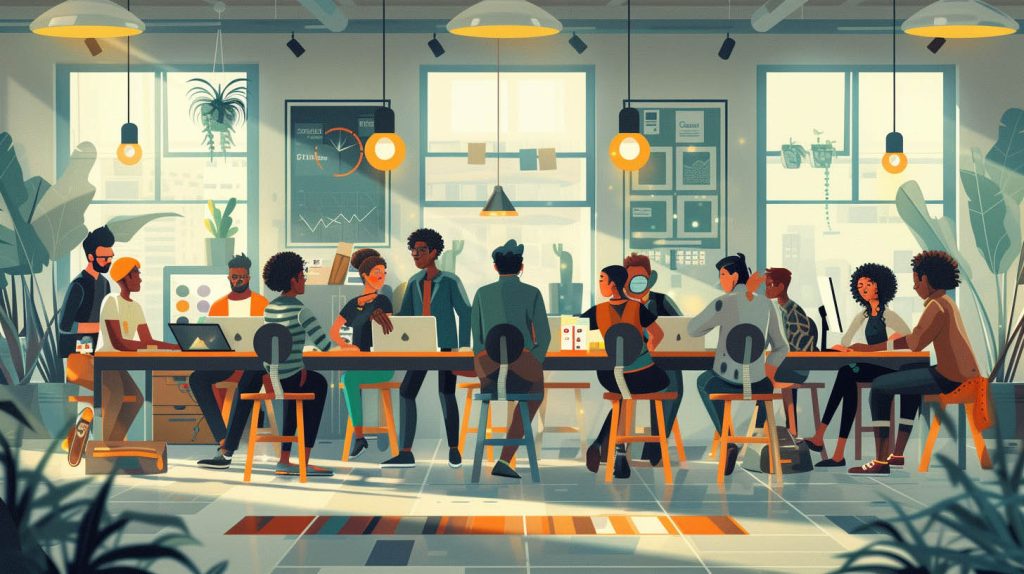
Creating Collaborative Spaces: Furniture Solutions for Team-Based Work
The Evolution of Workplace Collaboration
Modern work increasingly emphasizes collaboration over individual tasks. For Northern Virginia businesses in the Washington DC metro area, where innovation and teamwork drive success, creating spaces that facilitate effective collaboration has become essential rather than optional.
However, collaborative spaces require more than pushing desks together or adding a conference table. Truly effective team-based work environments need thoughtful furniture selections that support various collaboration modes, accommodate different team sizes, and balance openness with focus capability.
Understanding how different furniture configurations impact team dynamics helps businesses create spaces that enhance productivity, creativity, and employee satisfaction while supporting the collaborative work styles that define modern organizations.
Understanding Different Collaboration Modes
Effective collaborative spaces accommodate multiple interaction types, each requiring different furniture arrangements and environmental characteristics.
Formal team meetings require traditional conference settings with appropriate seating for all participants, clear sightlines to presentation displays, and technology integration for remote participants. These structured sessions need furniture that supports extended sitting while maintaining professional atmospheres.
Informal huddles benefit from casual furniture arrangements that encourage spontaneous discussions. Standing-height tables, comfortable lounge seating, and flexible configurations support the quick check-ins and brief problem-solving sessions that occur throughout workdays.
Brainstorming sessions thrive in dynamic environments where participants can move freely, capture ideas visually, and shift between individual thinking and group discussion. Mobile furniture, writable surfaces, and adaptable layouts enable the energy and creativity these sessions require.
Project work demands surfaces that accommodate laptops, documents, and collaborative materials while allowing team members to work side-by-side for extended periods. Height-adjustable standing desks in collaborative configurations support sustained project work with position variety.
Successful collaborative spaces provide furniture supporting all these modes, allowing teams to select environments matching their immediate needs.
Huddle Room Furniture Essentials
Huddle rooms—small spaces designed for 2-6 person meetings—have become workplace staples as organizations recognize that not every meeting requires large conference rooms.
Compact tables sized for intimate discussions without overwhelming small spaces form the foundation of effective huddle rooms. Round or square tables in the 36″-48″ range accommodate 4-6 people while leaving room for movement and equipment.
Comfortable seating encourages productive discussions. While conference-style chairs work well, many DMV area businesses find that mixing seating types—a few traditional chairs plus a small sofa or lounge chairs—creates more inviting environments that encourage creative thinking.
Technology integration is essential for modern huddle rooms. Tables with built-in power and data connections, wall-mounted displays positioned at appropriate viewing heights, and simple connectivity for screen sharing ensure technology enhances rather than disrupts collaboration.
Acoustic considerations matter in huddle rooms, particularly in open offices where sound travels. Furniture selections can include acoustic panels, sound-dampening materials, or strategic placement that minimizes noise transmission to adjacent workspaces.
Open Collaboration Zones
Open collaboration zones provide flexible spaces where teams gather for various work modes without formal meeting room reservations. These areas require furniture that adapts to changing needs throughout the day.
Modular seating systems allow endless reconfigurations from individual focus work to team collaboration. Mobile components on casters enable employees to create custom arrangements matching immediate needs—pulling pieces together for team sessions or separating them for individual tasks.
Variety in seating heights and styles accommodates different work preferences and collaboration types. High-top tables for standing discussions, standard-height tables for traditional work, and low lounge seating for casual conversations provide options that teams select based on their activities.
Writable surfaces—whether whiteboards, glass boards, or writable walls—support visual thinking and idea capture during collaborative sessions. Positioning these surfaces near flexible seating creates natural gathering points for brainstorming and problem-solving.
Power accessibility throughout open zones ensures devices stay charged during extended collaborative sessions. Floor-mounted power pedestals, tables with integrated outlets, or ceiling-dropped power solutions eliminate the constraints of wall-based power access.
Agile Workspace Furniture
Agile workspaces—designed to transform quickly between different uses—require furniture that moves, adjusts, and reconfigures with minimal effort.
Mobile tables on locking casters allow rapid space transformations from open floor for presentations to configured workstations for team projects. Quality casters ensure smooth movement even when loaded with equipment while locks prevent unwanted migration.
Nesting tables store compactly when not in use, maximizing space flexibility. These systems allow businesses to scale seating capacity up for large meetings and down for individual work without permanent furniture commitments.
Folding chairs that store efficiently yet provide comfortable seating support the variable occupancy typical of agile spaces. Quality folding chairs now rival fixed seating in comfort while offering storage advantages that maximize space utility.
For Northern Virginia businesses with limited square footage, agile furniture systems deliver multiple space configurations without requiring dedicated rooms for each collaboration type—maximizing return on expensive real estate.
Balancing Collaboration with Focus
While collaboration is essential, productive work also requires individual focus time. Effective collaborative space design recognizes this balance and provides furniture solutions supporting both modes.
Privacy screens or partial-height partitions in collaborative areas allow teams to define their space without completely isolating from surrounding activity. These elements reduce visual distractions while maintaining the openness that enables spontaneous interaction.
Acoustic furniture—seating with high backs, acoustic panels, or sound-absorbing materials—helps contain collaborative discussions, preventing them from disrupting nearby focus work. Strategic furniture placement creates natural sound barriers that improve acoustic comfort.
Dedicated quiet zones separate from collaborative areas give employees refuge when they need uninterrupted concentration. Furnishing these spaces with individual work surfaces, comfortable seating, and minimal visual stimulation supports the deep work that complements collaborative sessions.
Technology-Enabled Collaboration
Modern collaboration increasingly involves remote participants, requiring furniture designed to support hybrid team configurations.
Conference tables with integrated technology accommodate video conferencing equipment, ensuring remote participants see and hear clearly. Built-in cameras at appropriate angles, quality microphone arrays, and display positioning that works for both in-room and remote participants create equitable meeting experiences.
Cable management systems keep technology accessible while preventing the tangled mess that detracts from professional appearances. Furniture with integrated cable trays, grommets, and power access points supports technology needs without visual clutter.
Adjustable monitor arms in collaborative spaces enable screen sharing for both in-person and remote collaboration. Positioned correctly, displays serve as shared visual references that teams manipulate collectively, enhancing collaborative problem-solving.
Designing for Creativity and Innovation
Collaborative spaces intended for creative work and innovation benefit from furniture selections that break from traditional office aesthetics.
Varied seating options—from exercise balls to bean bags to traditional chairs—allow individuals to select positions that enhance their creative thinking. While not appropriate for all work modes, creative spaces benefit from unconventional options that stimulate different thinking patterns.
Movable writable surfaces encourage visual thinking and idea capture from any location. Mobile whiteboards, glass panels on wheels, or portable presentation boards allow teams to capture insights wherever they occur.
Casual furniture arrangements signal that creative spaces operate under different norms than formal meeting rooms. Lounge-style seating, informal table configurations, and residential-inspired furniture help employees shift from execution mindset to creative exploration.
Implementation Strategies for Collaborative Spaces
Successfully implementing collaborative furniture requires more than purchasing equipment—thoughtful planning ensures spaces serve their intended purposes.
Observe how teams actually collaborate before finalizing furniture selections. Different organizations have different collaboration cultures. Some thrive in completely open environments while others need more structure. Furniture should match your specific collaboration patterns rather than generic best practices.
Start with pilot implementations. Furnish one collaborative zone, gather employee feedback, and refine based on actual usage patterns before expanding throughout your facility. This iterative approach prevents expensive mistakes while ensuring final configurations meet real needs.
Provide usage guidelines without rigid rules. Help employees understand collaborative space intentions—some zones for quiet teamwork, others for energetic brainstorming—while allowing flexibility in how teams use them.
Plan for evolution. Collaborative needs change as organizations grow and work styles evolve. Choose furniture systems that allow reconfiguration and expansion rather than fixed installations that lock you into initial configurations.
ROI of Effective Collaborative Spaces
Investments in collaborative furniture deliver measurable returns through improved team productivity, enhanced innovation, and better space utilization.
Companies with well-designed collaborative spaces report 15-25% improvement in project completion times as teams work more effectively together. For Washington DC area businesses where collaboration drives results, these efficiency gains quickly justify furniture investments.
Innovation increases when collaboration becomes easier and more enjoyable. Furniture that supports productive teamwork removes friction from collaborative processes, encouraging the knowledge sharing and creative thinking that drive innovation.
Space utilization improves when collaborative furniture allows rooms to serve multiple purposes. Rather than dedicated conference rooms sitting empty much of the day, adaptable furniture enables spaces to support various team activities, maximizing return on expensive real estate.
Expert Guidance for Collaborative Space Design
All Business Systems helps Northern Virginia businesses design and furnish collaborative spaces that enhance teamwork without sacrificing individual productivity. Our experience across diverse industries reveals which furniture configurations support effective collaboration and which create expensive disappointments.
We evaluate your specific collaboration patterns, space constraints, technology requirements, and budget parameters to recommend furniture solutions that truly fit your needs rather than generic one-size-fits-all approaches.
Ready to create collaborative spaces that boost team performance? Contact us at All Business Systems for expert consultation on furniture solutions supporting effective teamwork.