
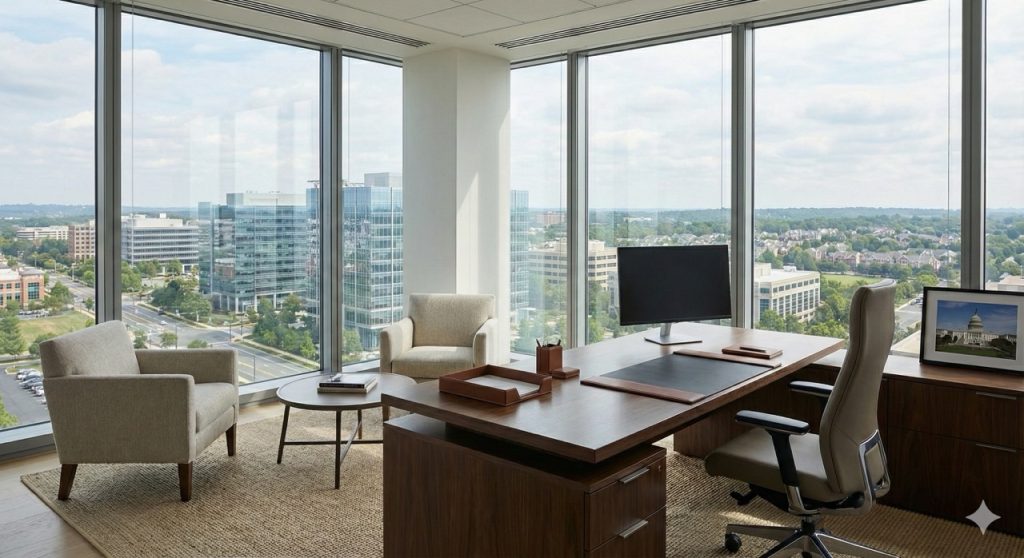
Executive Office Furniture: Projecting Authority Without Looking Outdated
The corner office has evolved. Today’s executives in the DC metro area face a unique challenge: their workspace must project authority and professionalism while remaining approachable enough for collaborative team meetings, video conferences, and informal check-ins. The days of imposing mahogany fortresses are fading, replaced by thoughtfully curated spaces that balance gravitas with modern sensibility.
For business leaders throughout Northern Virginia and Washington DC, the right office furniture selections can make all the difference in how you’re perceived by clients, colleagues, and team members alike.
The Evolution of Executive Authority
Executive office design has shifted dramatically over the past decade. Where once executives hid behind massive desks in wood-paneled offices, modern leadership requires visibility, accessibility, and adaptability. Your office furniture should communicate confidence and success without creating barriers to communication.
The most effective executive spaces today feature clean lines, quality materials, and purposeful design choices that feel current rather than dated. Think refined minimalism over ornate traditionalism. A well-designed executive office in 2024 tells clients and employees that you’re forward-thinking while respecting professional standards.
Desk Selection: Your Office Anchor
Your desk remains the centerpiece of any executive office, but it no longer needs to be an imposing barrier. Modern executive desks balance substantial presence with approachability. Look for pieces with clean architectural lines, quality construction, and finishes that complement rather than dominate the space.
Consider incorporating quality standing desks into your executive suite. Height-adjustable desks signal that you prioritize health and productivity without sacrificing executive presence. Many contemporary standing desk designs offer the refined aesthetics executives require while providing ergonomic benefits that keep you performing at your best during long strategy sessions.
Size matters, but bigger isn’t always better. An oversized desk can make you appear distant or unapproachable during one-on-one meetings. Select a desk that provides ample workspace without creating a physical barrier that discourages open dialogue.
Seating: Where Authority Meets Comfort
Your executive chair should be the finest seat in the office—but for the right reasons. Quality, ergonomic design, and refined aesthetics matter more than sheer size or excessive padding. A well-designed executive chair provides excellent lumbar support, adjustability, and sophisticated styling without looking like a throne.
Guest seating deserves equal attention. The chairs across from your desk set the tone for every meeting. Choose comfortable, well-constructed seating that puts visitors at ease while maintaining professional standards. Matching or complementary fabrics and finishes create visual cohesion that subconsciously communicates attention to detail.
Conference Solutions for Dual-Purpose Spaces
Many executive offices in the DC metro area now incorporate small conference areas for team meetings and client presentations. A refined conference table with seating for four to six creates a collaborative zone that’s separate from your personal workspace.
This dual-zone approach allows you to shift from authoritative leader to collaborative team member simply by changing where you sit. When conducting formal reviews or client meetings, you occupy your executive desk. For brainstorming sessions or mentoring conversations, you join colleagues around the conference table—projecting approachability without diminishing your leadership position.
Storage and Display: Curated, Not Cluttered
Executive credenzas, bookcases, and storage solutions should showcase achievements and expertise without overwhelming the space. Select pieces that match your desk’s design language and provide both open display areas and concealed storage.
Display credentials, awards, and meaningful items strategically. A few well-chosen pieces communicate success more effectively than walls covered in every certificate you’ve ever received. Closed storage keeps necessary files accessible while maintaining the clean, organized appearance that reinforces executive competence.
Material and Finish Considerations
Wood finishes remain popular in executive offices, but today’s options extend far beyond traditional dark mahogany. Medium walnut, lighter oak, and even sophisticated gray-washed finishes offer executive presence without the dated appearance of heavily ornate traditional furniture.
Metal accents—brushed nickel, matte black, or bronze—add contemporary refinement when incorporated thoughtfully. Glass elements, whether in desk surfaces, credenza doors, or tabletops, introduce transparency (literally and figuratively) that aligns with modern leadership values.
Upholstery choices matter equally. Quality leather remains a classic executive choice, but modern fabrics offer durability, comfort, and contemporary aesthetics that may better suit your office environment and personal style. Consider the overall visual impression: you want cohesive sophistication, not matching furniture sets that look catalog-ordered.
Lighting: The Overlooked Authority Element
While not furniture per se, lighting dramatically affects how your furniture—and you—are perceived. Layer ambient, task, and accent lighting to create depth and visual interest. A quality desk lamp provides focused task lighting while serving as a design element that reinforces your attention to detail.
Natural light remains the gold standard. Position your desk to take advantage of windows without creating glare on your computer screen. The right lighting makes even modest furniture appear more refined and creates an environment where both authority and approachability can coexist.
The DC Metro Executive Context
Washington DC area executives often host clients and colleagues from diverse industries, from government contractors to tech innovators to nonprofit leaders. Your office must appeal across this spectrum—professional enough for the most traditional visitor, yet contemporary enough that you don’t appear out of touch with current business practices.
This regional context makes versatile, timeless design choices especially valuable. Avoid trendy extremes in either direction. Instead, invest in quality pieces with clean design that will remain relevant and impressive for years to come.
Investment Versus Expense
Executive office furniture represents a significant investment, but quality pieces deliver returns through longevity, impression management, and daily performance benefits. Well-constructed furniture from reputable manufacturers will serve you for decades while cheaper alternatives may require replacement within years.
Consider the cost-per-use calculation: furniture you interact with daily for 10-15 years justifies premium pricing. Your executive suite is also a client-facing space that directly influences business relationships and opportunities—making it one of the most important investments in your professional presence.
Ready to create an executive office that commands respect while remaining approachable? Contact us at All Business Systems for expert guidance on selecting furniture that positions you for leadership success in the modern workplace.