
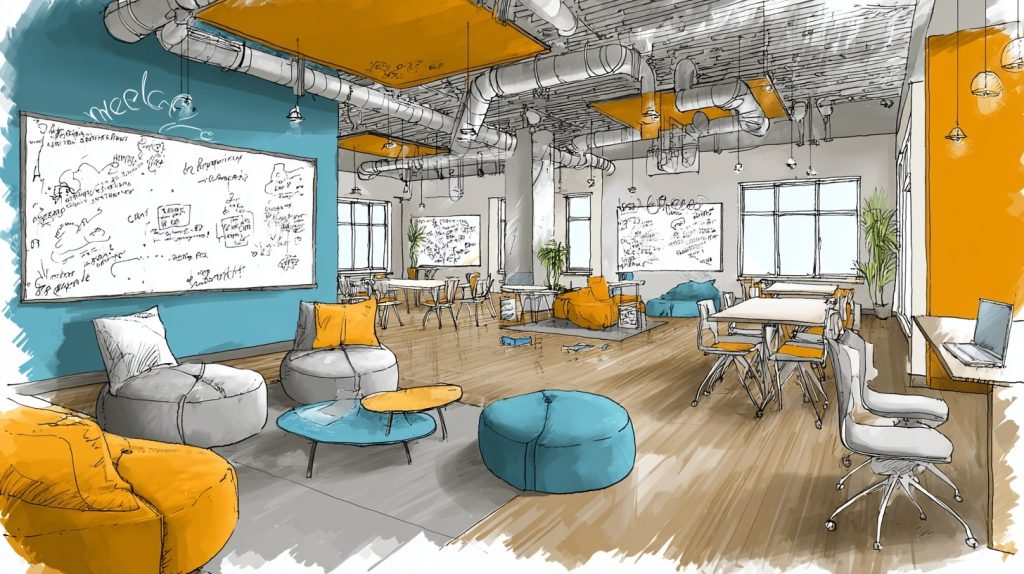
Furniture Strategies for Creative Brainstorming and Innovation Spaces
Furniture Strategies for Creative Brainstorming and Innovation Spaces
Innovation doesn’t happen at traditional desks. Breakthrough ideas emerge during relaxed collaborative sessions where teams think freely without constraints. Yet many Northern Virginia and DC metro offices lack physical spaces that support creative thinking. Conference rooms feel too formal. Workstations provide no collaboration space. Furniture designed for operational efficiency inhibits the exploratory thinking that drives innovation. Strategic furniture investments create spaces where creativity flourishes.
Why Physical Space Matters for Creative Thinking
Environmental psychology research consistently shows that physical settings influence cognitive processes. Rigid, formal spaces promote conventional thinking. Relaxed, flexible environments encourage experimental ideas and associative thinking patterns underlying innovation. For DC area businesses pursuing competitive advantage through creativity, furniture and space design become strategic assets rather than operational necessities.
The challenge is creating environments that balance creative freedom with practical functionality. Pure recreation room aesthetics undermine productive work. Excessively formal business furniture stifles creativity. Effective innovation spaces find the balance—professional enough for serious work, relaxed enough for experimental thinking.
Flexible Furniture Supporting Multiple Ideation Modes
Innovation activities vary—individual brainstorming, pair collaboration, small group ideation, large team workshops. Furniture supporting all these modes maximizes space utility. Mobile tables that separate for solo work or combine for group sessions. Modular seating that clusters for discussion or disperses for independent thinking. Writable surfaces available throughout spaces for capturing ideas wherever they emerge.
For Northern Virginia businesses, this flexibility proves particularly valuable when innovation spaces serve varied teams. Marketing departments might use spaces differently than product development groups. Furniture adaptability ensures spaces serve everyone effectively.
All Business Systems provides flexible furniture solutions for innovation spaces, including mobile standing desks and reconfigurable tables that support diverse creative work modes throughout your DC metro office.
Posture Variety Stimulating Different Thinking Modes
Creative thinking benefits from physical variety. Standing brainstorming sessions generate different energy than seated discussions. Perching on stools creates engagement different from sinking into lounge seating. For DC metro innovation spaces, furniture supporting multiple postures throughout sessions keeps energy high and thinking fresh.
Consider including standing-height work surfaces for active brainstorming. Bar-height tables with stools for energetic small group work. Traditional seated-height tables for detailed planning. Lounge seating for reflective thinking and idea review. This variety allows teams to shift positions as activity modes change, preventing the mental stagnation that accompanies extended single-posture sessions.
Writable Surfaces Everywhere
Innovation spaces demand abundant writable surfaces for capturing and developing ideas. Whiteboards, glass boards, or writable wall surfaces provide large-format ideation space. Smaller personal writable surfaces let individuals develop thoughts privately before sharing. Mobile boards position writing surfaces wherever teams work rather than forcing movement to fixed locations.
Quality writable furniture uses materials that erase cleanly without ghosting—remnant marks from previous sessions that muddle new work. For Northern Virginia businesses, investing in proper marker board surfaces rather than cheap alternatives prevents frustration that interrupts creative flow.
Some innovative furniture integrates writable surfaces directly—tables with marker board tops, chairs with writable backs, or storage units with writable sides. These unexpected writable locations encourage spontaneous idea capture regardless of where inspiration strikes.
Material and Color Psychology
Furniture materials and colors influence mood and thinking patterns. Natural materials like wood create warmth and organic associations that support creative thinking. Bright colors stimulate energy and experimental mindsets. Curved forms feel more approachable than strict rectangular geometries. For DC area innovation spaces, these details combine into environmental experiences supporting creativity.
Avoid monochromatic institutional aesthetics that signal conventional thinking. Instead, consider varied colors, mixed materials, and organic forms that visually communicate permission to think differently. This doesn’t require garish excess—thoughtful color accents, varied textures, and deliberate style mixing create the psychological environment supporting innovation.
Technology Integration for Modern Ideation
Contemporary innovation combines analog and digital methods. Teams sketch on whiteboards while researching on tablets. They capture ideas with phone cameras then develop them digitally. Furniture must support these hybrid workflows. Power access throughout spaces. Display screens for presenting research or prototypes. Device charging solutions preventing dead battery interruptions. WiFi strong enough for multiple simultaneous connections.
For Northern Virginia companies, technology integration shouldn’t dominate innovation spaces. Excessive screens and digital tools can actually hinder creative thinking by encouraging information consumption over idea generation. The right balance provides technology when helpful without making innovation sessions feel like typical meetings surrounded by monitors.
Comfortable Duration for Extended Sessions
Innovation workshops often run hours—sometimes full days. Furniture must remain comfortable throughout extended sessions without encouraging sleepy disengagement. This requires balance—supportive enough to prevent fatigue, active enough to maintain energy. Ergonomic task seating works better than overstuffed lounge furniture that encourages passive observation rather than active participation.
Include comfortable retreat furniture for breaks and individual reflection periods during longer sessions. These spaces let participants step away briefly, process ideas, and return refreshed. For DC metro businesses, acknowledging that creativity includes both active generation and quiet reflection periods influences furniture selection and space planning.
Inspiring But Not Distracting Environments
Innovation spaces benefit from visual interest that sparks creativity without creating distraction. Furniture choices contribute to this balance. Unique pieces become conversation starters and creative prompts. Overly outrageous furniture becomes distraction overshadowing actual work. For Northern Virginia businesses, selecting furniture with distinctive character while maintaining professional functionality creates inspiring without disruptive environments.
Consider furniture with interesting stories—sustainably sourced materials, local craftsmanship, innovative design. These narratives add meaning to spaces that participants engage with mentally, supporting the creative mindset you’re cultivating.
Separating Innovation Space From Operational Environment
Effective innovation spaces feel different from regular office areas. This differentiation helps participants mentally transition into creative modes rather than bringing operational thinking into innovation sessions. Furniture styling that contrasts with broader office aesthetics—without completely clashing—creates this separation.
For DC area businesses, this might mean more casual furniture in innovation spaces compared to professional operational areas. Or more colorful, playful aesthetics compared to neutral office palettes. The distinction signals that different rules and thinking modes apply in innovation zones.
ROI of Innovation Space Investment
Innovation space furniture proves harder to justify through traditional ROI calculations. Yet businesses with strong innovation capabilities consistently outperform competitors. Creative thinking solves problems, identifies opportunities, and drives competitive differentiation. For Northern Virginia companies, innovation space investment represents strategic capability development rather than simple operational expense.
Calculate returns through innovation outcomes—new products developed, process improvements generated, client problems solved creatively. When properly supported through effective spaces and furniture, innovation programs deliver measurable business value that far exceeds furniture costs.
Ready to create spaces where innovation thrives? Contact us at All Business Systems for expert guidance on furniture solutions that support creative thinking throughout your Northern Virginia or DC metro office.