
Designing Mentorship-Friendly Spaces in DC Metro Offices
Designing Mentorship-Friendly Spaces in DC Metro Offices
Knowledge transfer between experienced professionals and emerging talent builds organizational strength. Yet many Northern Virginia and DC metro offices lack physical spaces that support effective mentorship conversations. These interactions need privacy without formality, comfort without excessive time commitment, and proximity without disruption. Thoughtful furniture selection creates mentorship-friendly environments that encourage the relationships driving professional development.
Why Physical Space Matters for Mentorship
Virtual mentorship tools abound, but face-to-face conversations still deliver superior results for relationship building and nuanced guidance. The challenge for DC area businesses is creating spaces where these conversations naturally occur. Open workstations lack privacy for sensitive career discussions. Formal conference rooms feel too official for casual check-ins. Mentorship thrives in environments that split the difference—semi-private, comfortable, and accessible.
When offices lack mentorship-appropriate spaces, these vital conversations happen less frequently or migrate to coffee shops and other off-site locations. While occasional external meetings have value, regular off-site mentorship creates logistical barriers that reduce interaction frequency. On-site furniture solutions eliminate these barriers.
Small-Scale Seating Clusters
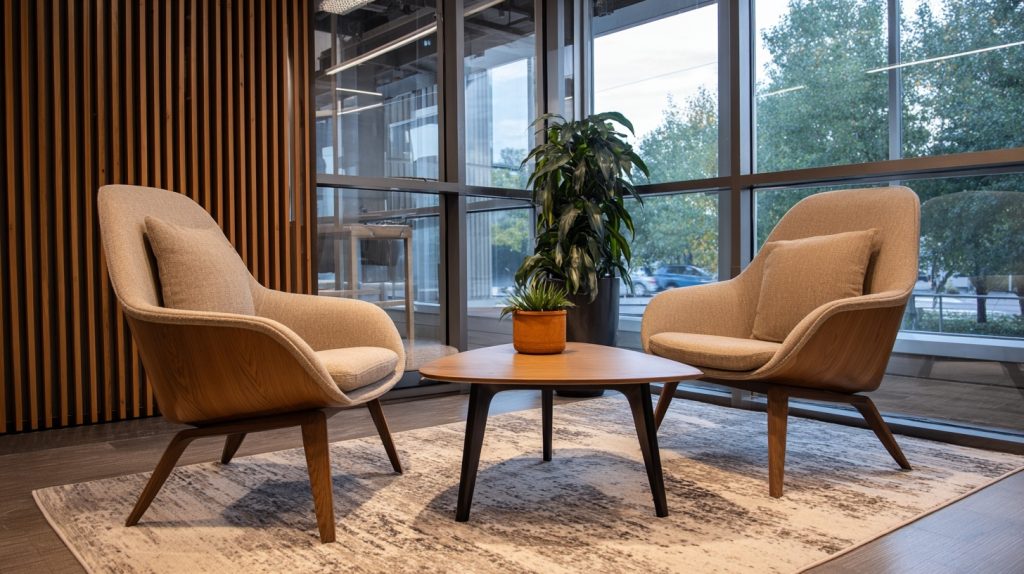
Effective mentorship furniture creates intimate conversation spaces for 2-3 people. Lounge seating arranged in L-shapes or face-to-face configurations works well, providing comfortable settings that encourage extended discussions without the rigidity of conference room chairs. For Northern Virginia offices, positioning these clusters near windows or in corner locations provides environmental interest that makes conversations feel less confined.
Table height matters in mentorship settings. Low coffee tables support casual conversation and laptop sharing when reviewing projects. Higher café-style tables accommodate note-taking and working sessions where mentor and mentee tackle problems together. Quality furniture solutions include both options, allowing mentoring pairs to choose settings matching their interaction style.
Strategic Placement Throughout the Office
Mentorship spaces should be visible but not central. Positioning clusters along office perimeters provides acoustic separation from high-traffic areas while remaining accessible. This placement signals that mentorship furniture is available for use without requiring reservations or special permission. For DC metro companies wanting to encourage mentorship culture, easy access proves essential.
Avoid relegating all mentorship furniture to one corner. Distribution throughout the office ensures everyone can access appropriate spaces regardless of where they typically work. Multiple locations also reduce competition for limited spots during popular times.
Privacy Without Isolation
Mentorship conversations often touch on sensitive topics—career challenges, skill gaps, office dynamics. Semi-private furniture arrangements provide acoustic separation without the commitment of completely enclosed rooms. Low partitions, strategic planter placement, or positioning clusters in alcoves creates privacy while maintaining visual connection to the broader office.
This balance matters for both parties. Mentees feel more comfortable discussing challenges when conversations aren’t completely public. Mentors appreciate privacy that allows candid feedback. Yet complete isolation can feel uncomfortable, especially for new mentoring relationships. Semi-private furniture solutions provide appropriate boundaries without awkward enclosure.
Comfort That Encourages Longer Conversations
Effective mentorship takes time—30 to 90 minutes for meaningful discussions. Furniture supporting these durations requires more comfort than quick-meeting furniture but less formality than executive seating. Upholstered lounge chairs with moderate back support work well, providing comfort without encouraging sleepy relaxation inappropriate for mentorship work.
For Northern Virginia businesses, considering ergonomic details in mentorship furniture demonstrates commitment to these relationships. Side tables for coffee cups, adequate lighting for note-taking, and power access for laptops all signal that mentorship conversations are valued organizational activities worthy of proper support.
All Business Systems can help you select comfortable seating solutions and work surfaces, including versatile standing desks, that create effective mentorship environments throughout your DC metro office.
Flexible Furniture for Varied Mentorship Styles
Mentorship takes many forms. Some pairs prefer structured sessions with agendas and goals. Others benefit from casual conversations that organically address current challenges. Some mentoring relationships are formally assigned, while others develop naturally from project collaboration. Furniture supporting all these styles maximizes mentorship program success.
Consider providing variety in mentorship furniture—some configurations more formal, others relaxed. Different pairings will gravitate toward settings matching their relationship dynamics. For DC area offices with diverse teams, this variety ensures everyone finds comfortable mentorship environments.
Writable Surfaces for Collaborative Problem-Solving
Many mentorship conversations involve working through problems together—career path planning, project strategy development, skill building. Nearby whiteboards or tables with writable surfaces transform mentorship spaces into collaborative workshops where concepts can be visualized and explored.
Mobile whiteboards offer particular value, allowing mentoring pairs to pull writing surfaces to their chosen seating area rather than relocating to wherever permanent boards exist. For Northern Virginia companies serious about mentorship, this flexibility removes minor friction points that might otherwise discourage frequent interactions.
Creating Culture Through Environmental Design
Mentorship furniture does more than accommodate existing programs—it actively promotes mentorship culture. Visible, accessible, well-designed mentorship spaces signal organizational commitment to professional development. When senior leaders use these spaces regularly, they model mentorship as a valued activity rather than something fitting into leftover time.
For DC metro businesses competing for talent, strong mentorship programs offer significant recruitment and retention advantages. Physical environments supporting these programs demonstrate that development commitments extend beyond policy documents to real investment in employee growth.
Measuring Mentorship Space Success
How do you know if mentorship furniture investments succeed? Monitor usage through observation or simple sign-in systems. Survey mentoring program participants about space adequacy. Track whether mentorship relationships develop more readily after introducing appropriate furniture.
For Northern Virginia companies, mentorship space success ultimately manifests in program outcomes—relationship duration, participant satisfaction, measurable skill development, and retention rates for mentees. When physical environments support these results, furniture investments prove their value beyond simple cost-per-square-foot calculations.
Ready to create mentorship-friendly spaces in your office? Contact us at All Business Systems for expert advice on furniture solutions that support professional development throughout your Northern Virginia or DC metro workspace.