
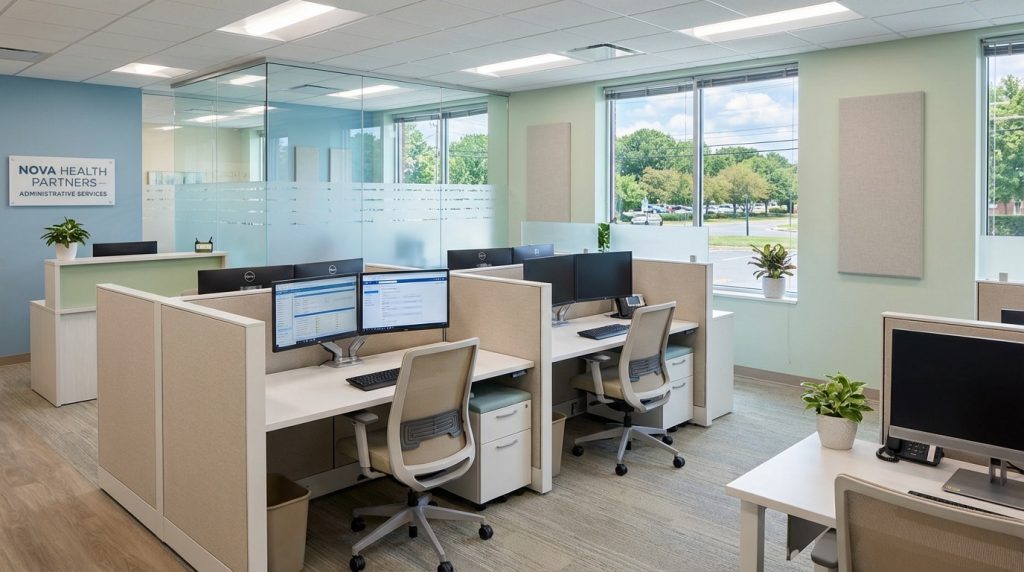
Healthcare Administrative Offices: Furniture That Supports Patient Privacy and Staff Wellness
The Unique Demands of Healthcare Administration
Healthcare administrative offices throughout the Northern Virginia and Washington DC region operate under requirements that differ significantly from typical corporate environments. Between HIPAA compliance mandates, the physical demands of healthcare work, and the need to create calm environments during stressful situations, medical office furniture must serve multiple masters simultaneously.
Designing for HIPAA Compliance
Patient privacy is not merely a best practice in healthcare settings. It is federal law. Office layouts must account for the protection of Protected Health Information at every touchpoint. Reception desks need privacy screens and angled positioning to prevent casual observation of patient records. Workstations where staff access electronic health records require visual barriers that block screens from passing visitors.
Private consultation spaces allow staff to discuss sensitive information with patients and family members away from waiting areas. These rooms benefit from sound-absorbing materials and solid doors rather than glass partitions that might compromise confidentiality.
Antimicrobial Surfaces and Easy-Clean Materials
Infection control extends beyond clinical spaces into administrative areas. Furniture surfaces in medical environments should resist bacterial growth and withstand frequent cleaning with healthcare-grade disinfectants. Vinyl and antimicrobial fabrics outperform traditional upholstery materials in these settings, maintaining appearance while supporting sanitation protocols.
Desk surfaces, chair arms, and high-touch areas benefit from non-porous materials that do not harbor pathogens. When selecting office furniture for healthcare settings, inquire about antimicrobial treatments and compatibility with common healthcare cleaning agents.
Supporting Staff Through Long Shifts
Healthcare administrative staff often work extended shifts, frequently while managing high-stress situations. Ergonomic furniture becomes essential for preventing fatigue and repetitive strain injuries that can sideline valuable team members. Chairs with proper support, keyboards at correct heights, and monitors positioned to reduce neck strain all contribute to staff wellbeing.
Quality standing desks offer healthcare administrative staff the flexibility to alternate positions throughout demanding shifts. The ability to stand while taking calls or processing paperwork reduces the physical toll of sedentary work while maintaining full functionality.
Reception Areas That Calm Anxious Visitors
Patients and families arriving at healthcare facilities often experience anxiety or distress. Reception and waiting area furniture can either amplify these feelings or help mitigate them. Comfortable seating, calming colors, and thoughtful arrangement create environments that feel less institutional and more supportive.
Consider furniture that allows personal space while accommodating companions who provide support during medical visits. Varied seating options including individual chairs, small groupings, and accessible seating ensure all visitors feel welcomed.
Creating Functional Healthcare Workspaces
Healthcare administrative offices require careful balance between privacy requirements, infection control, staff wellness, and patient experience. Working with furniture specialists who understand these unique demands ensures your facility meets regulatory requirements while supporting everyone who enters your space.
Ready to create a healthcare workspace that prioritizes both compliance and comfort? Contact us at All Business Systems for expert guidance on medical office furniture solutions.