
The 4-Day Workweek and Your Office: Furniture for Intensified Productivity
The Compressed Schedule Revolution
Organizations across the Northern Virginia and DC metro region are experimenting with compressed workweeks, condensing traditional schedules into fewer but longer days. This shift presents both opportunities and challenges for workplace design. When employees work intensified schedules, office furniture must support sustained focus, physical comfort during extended hours, and effective recovery between demanding workdays.
Supporting Longer Daily Work Periods
A ten-hour workday places different demands on furniture than a standard eight-hour shift. Chairs that feel comfortable at hour two may become problematic by hour eight. Desks that work adequately for shorter periods may reveal ergonomic shortcomings during extended use. Organizations adopting compressed schedules should evaluate their furniture through the lens of extended occupation.
Quality ergonomic seating with multiple adjustment points, adequate cushioning, and breathable materials becomes more critical when employees spend additional hours at their workstations. Investing in superior seating pays dividends through reduced discomfort, fewer work-related injuries, and sustained productivity throughout longer days.
Movement and Posture Variation
Human bodies are not designed for static positions regardless of schedule structure, but longer workdays amplify the need for movement and posture variation. Office environments supporting compressed schedules should facilitate position changes throughout the day.
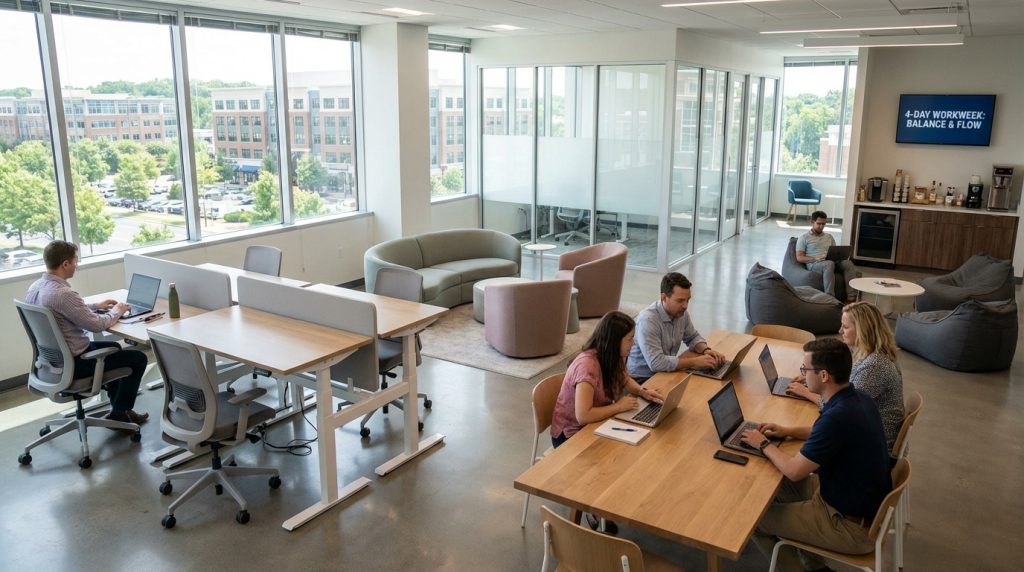
Quality standing desks allow employees to alternate between sitting and standing positions, breaking up extended seated periods that can cause stiffness and fatigue. Height-adjustable workstations represent particularly valuable investments for organizations where employees work intensified schedules.
Creating Recovery Spaces
Longer workdays require meaningful breaks for employees to recharge and return to tasks with renewed focus. Dedicated break areas with comfortable lounge seating, café-style tables, and relaxation zones support the recovery periods that make compressed schedules sustainable.
These spaces should feel distinctly different from work areas, signaling to employees that they have permission to truly disconnect during breaks. Comfortable sofas, acoustic separation from work zones, and natural lighting all contribute to effective recovery environments.
Collaboration Efficiency for Compressed Time
Compressed schedules create urgency around collaboration. When teams have fewer days together, meeting spaces must support efficient interaction. Conference rooms equipped with easily reconfigurable furniture allow quick transitions between meeting formats. Comfortable seating encourages productive discussions while quality tables with integrated power support hybrid meetings connecting in-office and remote team members.
Adapting Your Space to New Work Patterns
The shift toward compressed and flexible schedules continues reshaping workplace expectations. Furniture investments should anticipate these evolving patterns, prioritizing durability, adjustability, and comfort that sustains employees through intensified work periods.
Considering a transition to compressed schedules? Contact us at All Business Systems to discuss furniture solutions that support your team through longer, more productive workdays.