
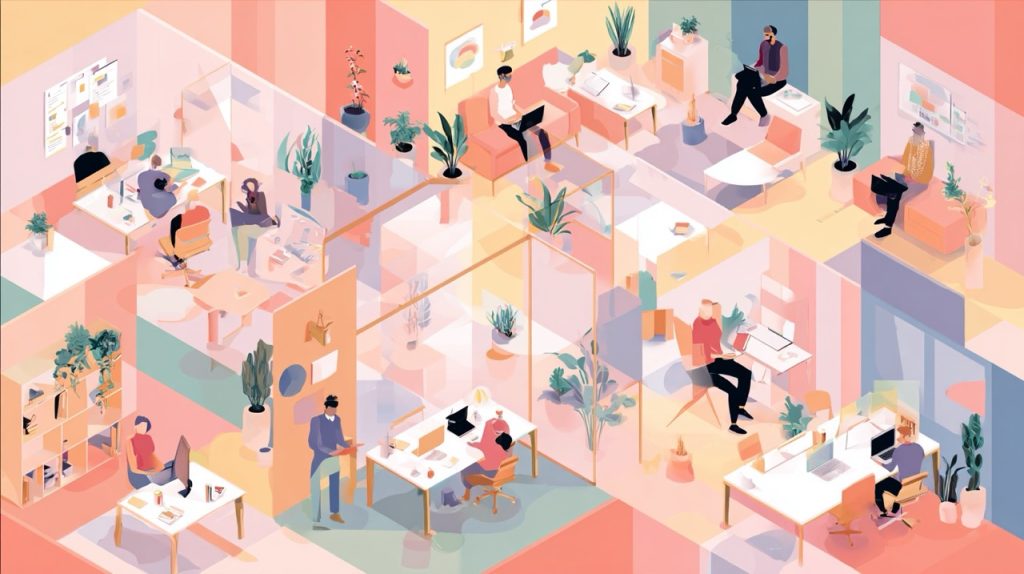
Hybrid Work Setup Guide: Furnishing Your Arlington Office for Flexible Schedules
Arlington’s Metro-accessible offices have become ground zero for hybrid work models in the DC region. With teams splitting time between home and office, daily attendance fluctuates dramatically. Monday might see 30% occupancy while Wednesday brings 80%. This variability demands a different approach to office furniture—one that maximizes flexibility and minimizes wasted space.
Understanding Hybrid Work Furniture Needs
Traditional office furniture assumes consistent occupancy. Every employee gets a dedicated desk, chair, and storage space whether they’re in the office daily or weekly. This model wastes money and square footage in hybrid environments where desks sit empty most days.
Hybrid work requires furniture that supports multiple users and multiple work modes. Your office needs to accommodate focused individual work, collaborative team sessions, and everything in between—often in the same day. The furniture you choose should facilitate this fluidity rather than creating friction.
Start by analyzing your team’s actual office usage patterns. Track attendance by day of week and time of day. Note which teams tend to coordinate their office days and which employees work independently. This data guides furniture investments that match real usage rather than assumptions.
Hot-Desking Solutions That Actually Work
Hot-desking—where employees don’t have assigned seating—sounds ideal for hybrid offices but often fails in practice. Success requires the right furniture infrastructure. Quality standing desks with height adjustment allow different employees to customize their workspace throughout the week without fighting over the few “good” desks.
Provide adequate personal storage separate from desks. Employees need secure space for items they keep at the office even without assigned seating. Locker systems or individual storage cubbies solve this challenge. Without them, hot-desking creates anxiety as employees worry about where to store their belongings.
Equip desks with easily accessible power and connectivity. When employees can work at any desk without hunting for outlets or adapters, hot-desking becomes seamless. Consider desks with integrated power modules and USB ports rather than relying solely on floor or wall outlets.
Modular Furniture for Changing Team Sizes
Tuesday morning might bring three people needing quiet focus space, while Thursday afternoon could see twelve team members arriving for a collaborative session. Modular furniture adapts to these swings without requiring constant reconfiguration.
Invest in tables and seating that can be quickly rearranged without tools. Mobile whiteboards and modular seating pods allow teams to create the exact workspace configuration they need for each session. When teams finish, these pieces can be reset for the next group’s needs.
Consider benching systems that provide individual workstations within shared structures. These systems maximize the number of available workspaces in your square footage while maintaining the flexibility hybrid work demands. They also reduce per-workspace costs compared to individual desks.
Creating Collaboration Zones
Hybrid workers often coordinate office days specifically for collaboration. If your office doesn’t support productive team sessions, employees lose their primary reason for commuting. Furniture plays a crucial role in making collaboration spaces actually functional.
Provide a variety of collaboration furniture options. Some teams need formal conference tables for structured meetings. Others work better in lounge-style seating arrangements for brainstorming sessions. Offer both rather than assuming one model fits all collaborative work.
Include mobile whiteboards, flip charts, and display screens in collaboration areas. Teams need to capture ideas and reference materials during sessions. Building these tools into your furniture plan ensures they’re available when needed rather than requiring last-minute scrambles.
Balancing Investment with Utilization
Hybrid work reduces your needed workstation count, but don’t slash furniture budgets proportionally. Redirect savings from fewer traditional desks toward higher-quality, more flexible pieces. A smaller quantity of excellent modular furniture serves hybrid teams better than maximum quantities of standard desks.
Plan for peak occupancy plus a buffer. If your busiest office day typically brings 70% of employees, furnish for 80-85%. This prevents overcrowding on high-traffic days while avoiding the waste of furnishing for 100% occupancy that never happens.
Think beyond desks and chairs. Hybrid offices need phone booths for private calls, focus pods for concentrated work, and casual seating for impromptu conversations. These specialized spaces become more important when employees choose to come to the office specifically for interactions they can’t replicate at home.
Ready to upgrade your office furniture for hybrid work success? Contact us at All Business Systems for expert advice and flexible furniture solutions.