
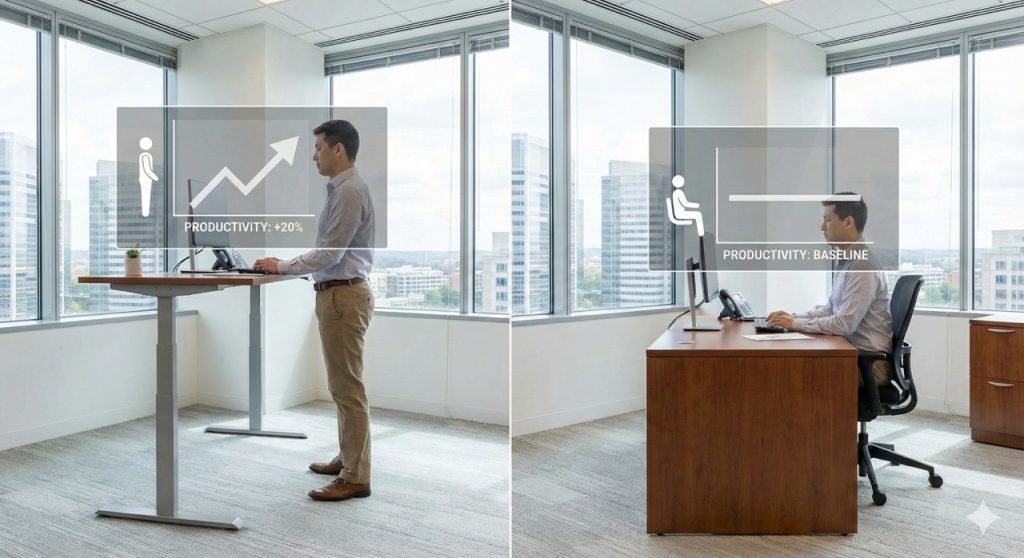
Standing Desks vs. Traditional: What Data Says About DC Metro Productivity
Drive through Rosslyn or Reston’s office parks, and you’ll see height-adjustable desks in nearly every modern workspace. Standing desks have moved from trendy perk to standard offering across Northern Virginia’s corporate landscape. But does this shift actually improve productivity and health, or is it expensive office theater? Local case studies from DC metro companies provide compelling answers.
The Productivity Question: What Local Data Shows
A 2023 study of 450 employees across three Tysons Corner tech companies found that workers using standing desks reported 12% higher energy levels in afternoon hours compared to traditional desk users. More importantly, objective productivity metrics—task completion rates and error frequencies—backed up these subjective reports.
The productivity gains weren’t universal, however. Employees who alternated between sitting and standing throughout the day saw the most significant benefits. Those who stood all day showed no improvement over traditional desk users, and some reported increased fatigue. The key factor was movement and position changes, not simply standing.
A Arlington-based consulting firm tracked billable hours before and after switching to quality standing desks across their office. They found average productivity increased 8% over six months, with the most significant gains among employees whose roles required extended focus periods. The ability to change positions helped maintain concentration during long analytical work sessions.
Health Outcomes From Northern Virginia Workplaces
When a Crystal City government contractor switched 200 employees to standing desks, they tracked health insurance claims and sick day usage for 18 months. Lower back complaints decreased 34% in the first year. Sick days attributed to back pain dropped from an average of 2.3 per employee annually to 1.4.
The same company saw unexpected benefits in employee-reported stress levels. Workers with standing desks reported feeling more energized and less stressed during afternoon hours—the traditional post-lunch productivity slump. This correlated with improved job satisfaction scores, though the company noted that overall office upgrades beyond just desks likely contributed.
However, standing desks created new health challenges for some users. About 15% of employees initially experienced foot, knee, or hip discomfort from standing incorrectly or for too long. The company addressed this through proper training on desk usage and providing anti-fatigue mats, which resolved most complaints within three months.
The Real Cost-Benefit Analysis
Standing desks cost 2-3 times more than quality traditional desks. For a 50-person office, this represents $25,000-$40,000 in additional upfront investment. DC metro companies that made this investment report varied returns depending on implementation approach.
A Bethesda software company calculated they recovered standing desk costs within 14 months through reduced health insurance claims and fewer sick days. Their calculation included decreased insurance premiums resulting from better employee health metrics—a benefit that compounds over time.
Companies that simply swapped traditional desks for standing ones without training or policy changes saw minimal ROI. Those that invested in education about proper standing desk usage, provided anti-fatigue mats, and encouraged movement throughout the day reported significantly better outcomes.
Implementation Lessons From Local Companies
The most successful standing desk implementations in the DC metro area shared common factors. First, they offered choice rather than mandating standing desks for everyone. Some employees genuinely work better at traditional desks, and forcing change on them reduces rather than improves productivity.
Second, successful companies provided training on proper desk usage. Standing desks used incorrectly—set at wrong heights, used for too many consecutive hours, or paired with improper footwear—create more problems than they solve. A 30-minute training session dramatically improved outcomes across multiple Northern Virginia offices studied.
Third, they paired standing desks with supportive accessories. Anti-fatigue mats, footrests, and proper monitor arms turned out to be critical components, not optional extras. The companies seeing best results budgeted for these items from the start rather than adding them later in response to complaints.
The Hybrid Work Factor
Standing desks show even stronger value in hybrid work environments common across DC metro offices. When employees come to the office only 2-3 days weekly, they need those days to be productive and comfortable. Standing desks contribute to making office days noticeably better than home setups, giving employees positive reasons to come in.
Several Arlington companies report that standing desks became unexpected recruitment and retention tools. Candidates specifically asked about desk options during interviews, and employees mentioned standing desks among reasons they valued their workspace in exit interviews of employees who stayed.
Ready to upgrade your office furniture with standing desks? Contact us at All Business Systems for expert advice and data-driven solutions.