
Sustainable Materials in Office Furniture: Beyond Bamboo and Recycled Plastic
Sustainability is no longer just a buzzword in the office furniture industry—it’s a driving force behind innovative design and manufacturing practices. While bamboo and recycled plastic are widely recognized as eco-friendly materials, a new wave of sustainable alternatives is emerging in office furniture production. These materials not only reduce environmental impact but also meet the growing demand for stylish, functional, and durable furniture. Let’s explore some of these cutting-edge materials and how they are reshaping the future of office furniture.
Cork: A Renewable and Versatile Resource
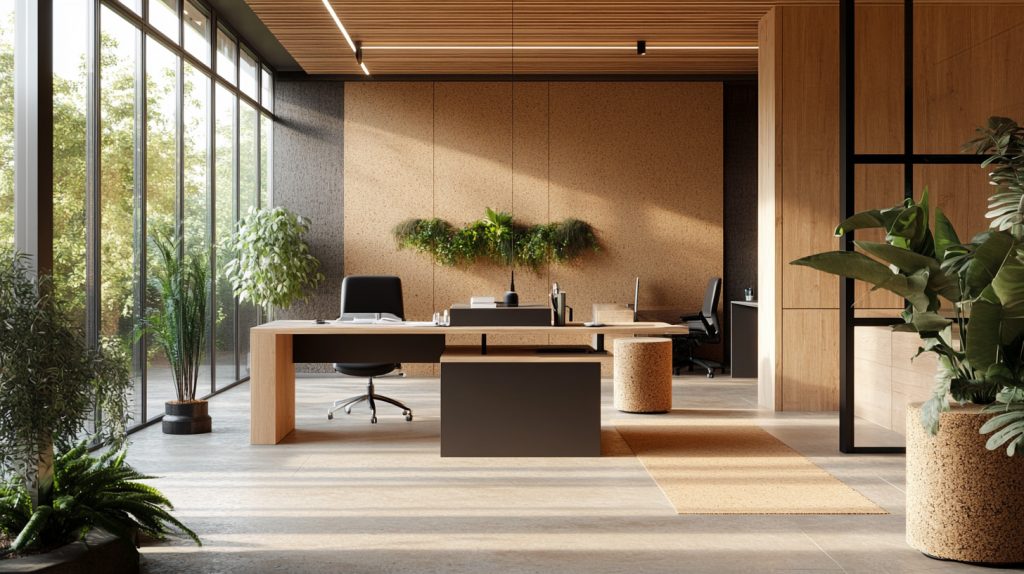
Cork is rapidly gaining popularity in the furniture industry due to its sustainability and unique properties. Harvested from the bark of cork oak trees, this material is 100% renewable, as the trees do not need to be cut down to harvest the cork. The bark regenerates every few years, making it an eco-friendly option for office furniture.
In addition to its renewability, cork offers excellent sound absorption and is naturally resistant to mold and mildew. This makes it ideal for use in office furniture, such as ergonomic chairs, desk surfaces, and partition walls. Its soft, warm texture adds a touch of natural beauty to any workspace while improving acoustics and indoor air quality.
Mycelium: The Future of Biodegradable Furniture
Mycelium, the root structure of fungi, is an innovative and biodegradable material that is beginning to find its place in office furniture design. Grown from agricultural waste and mushroom spores, mycelium is a lightweight, strong, and compostable material that can be molded into various shapes.
Its ability to grow quickly and decompose naturally makes mycelium an attractive option for sustainable office furniture. Designers are experimenting with its use in chairs, tables, and even shelving. Once the furniture reaches the end of its life cycle, it can be returned to the earth without contributing to landfill waste, creating a full circle of sustainability.
Reclaimed Wood: Giving New Life to Old Materials
Reclaimed wood is another eco-friendly material making waves in the office furniture industry. This material is sourced from old buildings, barns, and other structures that are no longer in use, reducing the need for new lumber and deforestation. Each piece of reclaimed wood has a unique character, often showcasing natural wear, grain patterns, and even nail holes from its previous life.
Office desks, shelving units, and conference tables made from reclaimed wood are not only sustainable but also bring a rustic and distinctive aesthetic to modern workspaces. By opting for reclaimed wood, companies can reduce their carbon footprint while creating an office environment with warmth and personality.
Hemp: A Fast-Growing and Sustainable Fiber
Hemp is a highly sustainable plant fiber that has been used for centuries, and its potential in office furniture manufacturing is gaining attention. Hemp grows rapidly, requires minimal water, and is naturally resistant to pests, making it an eco-friendly alternative to traditional fibers like cotton or synthetic materials.
Hemp fibers are being used to create durable textiles for office chairs, cushions, and upholstery. The fabric is breathable, long-lasting, and has a low environmental impact, making it a smart choice for sustainable office furniture. Additionally, hemp-based biocomposites are being developed as an alternative to plastic, offering further versatility in furniture production.
Algae-Based Bioplastics: A Green Alternative to Petroleum-Based Plastics
Algae-based bioplastics represent a groundbreaking solution to the environmental challenges posed by traditional petroleum-based plastics. These bioplastics are derived from algae, a rapidly growing and renewable resource. Unlike conventional plastics, algae-based bioplastics are biodegradable and leave a much smaller carbon footprint.
Furniture manufacturers are experimenting with algae-based bioplastics in the creation of ergonomic chair frames, desk accessories, and other office essentials. These bioplastics can mimic the durability and flexibility of traditional plastics while offering a sustainable, earth-friendly alternative that aligns with green initiatives.
Why Sustainable Office Furniture Matters
Choosing office furniture made from sustainable materials goes beyond reducing environmental impact; it contributes to healthier workspaces and promotes corporate responsibility. Employees benefit from improved indoor air quality and reduced exposure to harmful chemicals, while businesses can enhance their reputation by embracing eco-friendly practices.
Moreover, many sustainable materials, like mycelium and algae-based bioplastics, are opening up new possibilities in design and functionality, allowing companies to create innovative and unique office environments without sacrificing sustainability.
Ready to upgrade your office furniture with sustainable options? Contact us at All Business Systems for expert advice and top-quality solutions.