
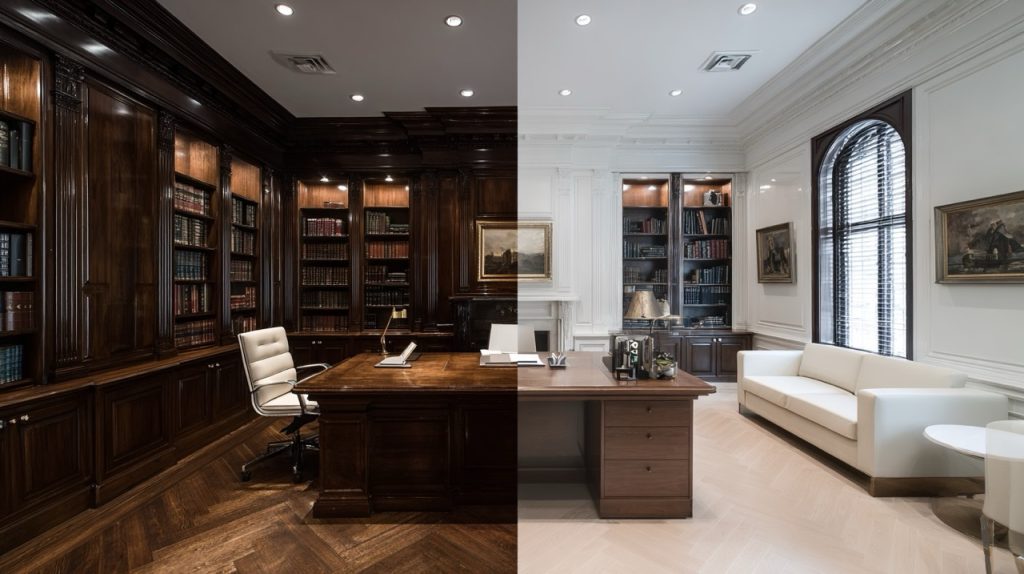
Why D.C. Law Firms Are Ditching Traditional Mahogany for Modern Office Furniture
Walk through any major law firm on K Street today and you’ll notice something different. The heavy mahogany desks and dark wood paneling that dominated legal offices for decades are disappearing. In their place: sleek contemporary furniture, glass surfaces, and lighter finishes that would have been unthinkable in traditional legal settings. This shift reflects more than changing aesthetic preferences—it represents a fundamental reimagining of what legal workspaces should communicate.
The Old Guard Aesthetic and What It Signified
Traditional law firm furniture served specific purposes beyond function. Dark mahogany, leather, and ornate detailing communicated gravitas, permanence, and connection to legal tradition. These were intentional design choices meant to reassure clients that their legal matters were being handled by serious, established professionals.
That aesthetic worked for decades because it aligned with client expectations. Corporate general counsels, government agencies, and high-net-worth individuals expected their lawyers to project traditional authority. Modern furniture might have suggested instability or lack of experience.
The problem? Those same clients have changed. Today’s general counsels are often younger, tech-savvy professionals who value efficiency and innovation as much as tradition. They’re less impressed by mahogany paneling than by law firms demonstrating they understand modern business challenges.
What Modern Furniture Communicates
Contemporary legal office furniture sends different signals—ones that resonate with today’s clients. Clean lines and lighter finishes suggest efficiency and forward thinking. Glass and metal elements communicate transparency. Flexible, modular arrangements demonstrate adaptability.
This matters because legal work itself has evolved. Modern law firms increasingly compete on technology adoption, collaboration capabilities, and responsive service—not just legal expertise. An office that looks like it hasn’t changed since 1985 undermines claims about being innovative and client-focused.
Quality standing desks have become particularly popular in DC law firms, not just for health benefits but for what they signal about the firm’s culture. Height-adjustable desks suggest a workplace that values employee wellbeing and stays current with workplace trends—attributes that appeal to associate recruitment.
Balancing Tradition and Innovation
The most successful furniture transitions in DC law firms don’t completely abandon traditional elements. Instead, they selectively incorporate modern pieces while maintaining some classic touches that preserve the firm’s identity.
Partner offices might feature contemporary desks with clean lines paired with one or two traditional leather chairs. Conference rooms could have modern tables with classic artwork on the walls. This approach communicates respect for legal tradition while demonstrating the firm has evolved with the times.
The key is avoiding awkward mixing. A heavy mahogany desk paired with a modern mesh office chair creates dissonance rather than balance. Choose furniture within the same general aesthetic family, even when blending traditional and contemporary elements.
Practical Benefits Beyond Aesthetics
Beyond signaling and image, modern furniture offers practical advantages that traditional pieces don’t. Contemporary office furniture typically weighs less, making reconfigurations easier as firm structure changes. Modular systems allow firms to adapt quickly to fluctuating team sizes without purchasing entirely new furniture.
Modern furniture also tends to integrate technology more seamlessly. Conference tables with built-in power and data ports eliminate the cable clutter that plagues traditional furniture. Workstations designed for multiple monitors accommodate how attorneys actually work today, rather than assuming a single computer and stacks of paper.
Maintenance represents another advantage. Contemporary finishes often prove more durable and easier to clean than traditional wood. In high-traffic areas like reception or common spaces, this practical benefit justifies the aesthetic shift.
The Associate Recruitment Factor
DC law firms compete intensely for top law school graduates. Furniture might seem like a minor factor in recruitment, but today’s associates notice workplace quality more than previous generations.
Associates who grew up with tech companies and startups as cultural reference points respond better to modern, flexible workspaces than to traditional partner-associate hierarchies reflected in furniture choices. Firms still furnishing associate bullpens with budget furniture while partners get custom mahogany send clear messages about how they value different team members.
Progressive firms are instead investing in high-quality, ergonomic furniture for all attorneys. This approach costs more upfront but pays returns in recruitment, retention, and productivity. When associates can choose between firms, workspace quality increasingly influences their decisions.
Managing Partner Resistance
The biggest obstacle to furniture modernization in many DC law firms isn’t budget—it’s senior partner attachment to traditional aesthetics. Partners who’ve spent decades in offices with mahogany furniture sometimes resist change as abandoning professional standards.
Successful modernization initiatives address this by starting with common areas and associate spaces before tackling partner offices. When partners see positive reactions from clients and recruits to updated conference rooms and reception areas, resistance to changing individual offices often softens.
Some firms also take a gradual approach, replacing furniture as it wears out rather than all at once. This method reduces both financial impact and cultural shock, allowing the firm to evolve its image over several years rather than forcing dramatic overnight change.
Ready to modernize your law firm’s furniture while maintaining professional credibility? Contact us at All Business Systems for expert guidance on contemporary furniture that works for legal professionals.