
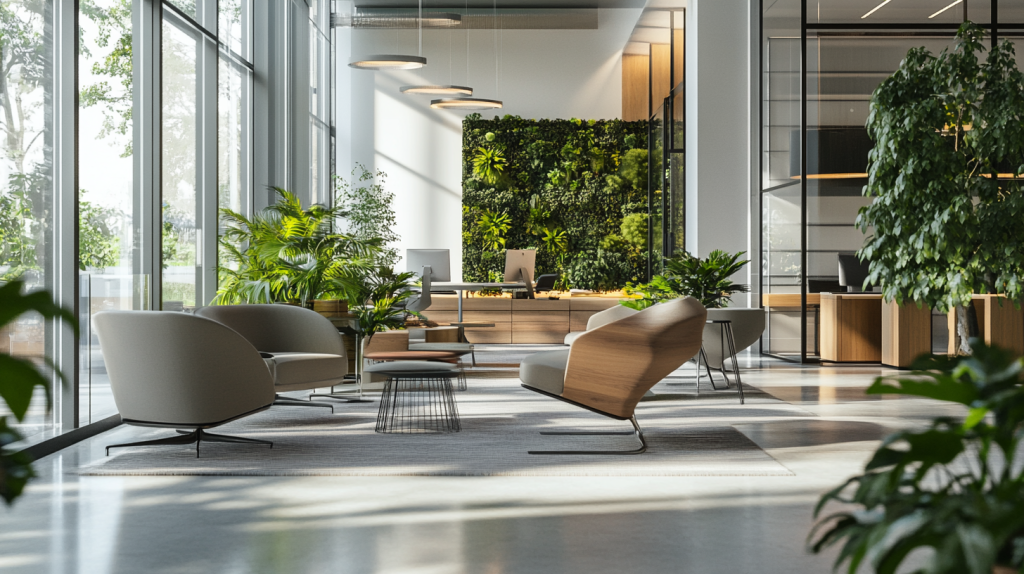
Workplace Gardens: Integrating Planters with Furniture
The integration of nature into office environments has evolved far beyond the lonely desk plant. Today’s workplace designs are embracing innovative approaches to biophilic design through furniture that seamlessly incorporates planters, creating dual-purpose elements that enhance both aesthetics and employee wellbeing.
The Science Behind Plant Integration
The benefits of incorporating plants into workspaces are well-documented and extend far beyond simple decoration. Research consistently demonstrates that workplace greenery delivers tangible benefits:
Improved Air Quality: Plants naturally filter airborne toxins and release oxygen, creating healthier breathing environments. This is particularly valuable in sealed office buildings where air can become stagnant and contain higher concentrations of volatile organic compounds (VOCs) from carpeting, furniture, and electronic equipment.
Stress Reduction: Multiple studies have shown that even brief visual contact with natural elements can lower stress hormones and blood pressure. In high-pressure work environments, these moments of natural connection become valuable reset opportunities throughout the day.
Enhanced Cognition: Proximity to plants has been linked to improved concentration, creativity, and problem-solving abilities—precisely the cognitive functions most valuable in knowledge work.
Acoustic Benefits: Strategic placement of plants can help absorb sound and reduce noise pollution, creating more comfortable acoustic environments that facilitate both concentration and conversation.
Innovative Planter-Furniture Integration
The most exciting developments in workplace greenery involve furniture designed with built-in plant accommodation. These solutions go far beyond simply placing pots near workstations, instead creating unified systems where plants become integral to the furniture’s design and function:
Partition-Planter Hybrids: Space dividers that incorporate soil beds at various heights allow plants to create natural, living boundaries between areas. These green divisions provide the functional separation of traditional partitions while softening the environment and improving air quality.
Table-Integrated Growing Spaces: Conference and collaborative tables with built-in planter sections bring nature directly into meeting spaces. These designs often feature recessed portions filled with low-maintenance plants, creating focal points that spark creativity and calm during discussions.
Modular Seating-Planter Systems: Lounge areas can benefit from modular components that alternate between seating and planting spaces. These systems can be reconfigured as needed, allowing the green elements to define different types of spaces or traffic patterns.
Vertical Garden Walls: Storage units and shelving systems designed with integrated irrigation support climbing plants, creating dramatic living walls that serve as both functional storage and natural air purifiers. The vertical orientation maximizes plant presence while minimizing floor space requirements.
Practical Considerations for Implementation
Successfully incorporating planted furniture requires thoughtful planning around several key considerations:
Plant Selection: Choose species appropriate for indoor environments with varying light conditions. Low-maintenance options like snake plants, pothos, ZZ plants, and certain succulents thrive in office environments while requiring minimal care.
Irrigation Solutions: Advanced planter-furniture often incorporates self-watering systems with water reservoirs that reduce maintenance requirements. Some cutting-edge designs even feature smart irrigation systems that monitor soil moisture and deliver water only when needed.
Drainage Management: Proper drainage is essential to prevent water damage to the furniture components and surrounding flooring. Quality integrated planters include isolation between soil compartments and furniture materials, along with appropriate drainage systems.
Maintenance Protocols: Establish clear responsibility for plant care, whether assigned to facilities staff, designated plant ambassadors, or through a professional plant maintenance service. Even low-maintenance plants require some attention to thrive.
Beyond Aesthetics: Strategic Placement
The placement of planted furniture elements can be strategically leveraged to enhance workplace function:
Natural Wayfinding: Distinctive planted elements can serve as landmarks for navigation through open office environments, creating intuitive wayfinding cues without explicit signage.
Transition Markers: Planted dividers effectively signal transitions between different functional areas—for example, separating collaborative zones from quiet focus areas with a visual and physical green boundary.
Biophilic Nudges: Positioning planted elements in areas where short mental breaks are beneficial—near high-concentration workstations or intensive collaboration spaces—provides natural prompts for momentary restoration.
Social Attractors: Research shows that planted areas naturally attract people and encourage lingering. Placing planted furniture in areas intended for spontaneous interaction or community building supports these behaviors without forced programming.
All Business Systems also offers a variety of high-quality standing desks designed to boost workplace comfort and productivity.
Ready to upgrade your office furniture? Contact us at All Business Systems for expert advice and top-quality solutions.