
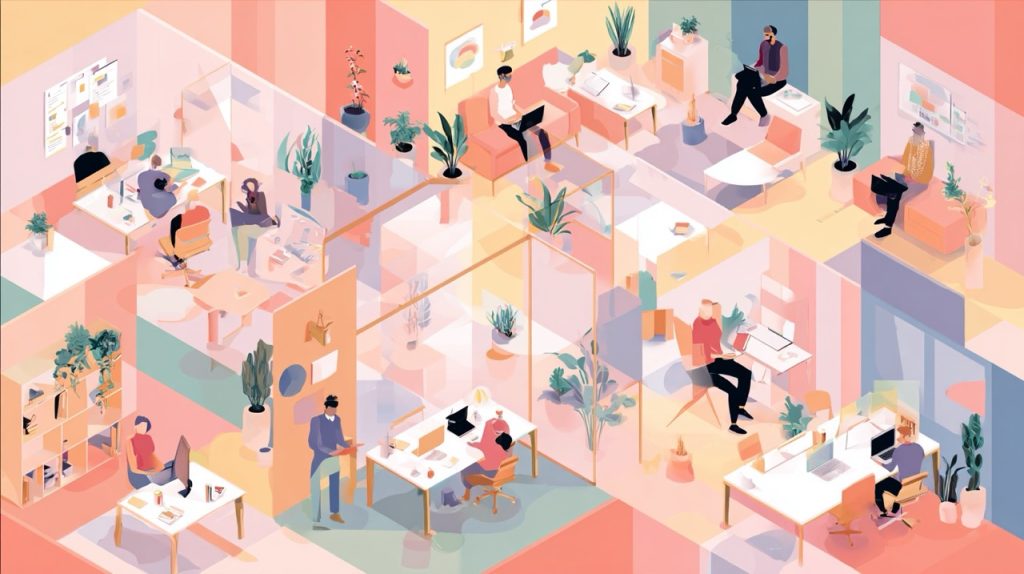
Hybrid Work Setup Guide: Furnishing Your Arlington Office for Flexible Schedules
The Arlington Hybrid Work Challenge
Arlington’s Metro-accessible office landscape has transformed dramatically in recent years. With fluctuating daily attendance becoming the norm rather than the exception, companies throughout the DC metro area are rethinking how they design and furnish their workspaces. The traditional model of assigned desks and static office layouts simply doesn’t align with today’s flexible work schedules, where some employees work from home Monday and Wednesday while others come in Tuesday through Thursday.
The solution isn’t just about accommodating fewer people—it’s about creating dynamic spaces that adapt to different usage patterns throughout the week. Forward-thinking Arlington businesses are discovering that the right furniture strategy can transform their offices from underutilized real estate into highly efficient, cost-effective workspaces that employees actually want to use.
Hot-Desking: Making Every Square Foot Count
Hot-desking represents a fundamental shift in office design philosophy. Instead of assigning permanent desks to employees who may only use them two or three days per week, companies are implementing shared workstation systems that maximize space utilization. In Arlington’s competitive commercial real estate market, where every square foot carries a premium price tag, this approach delivers immediate financial benefits.
The key to successful hot-desking lies in selecting furniture that supports this flexibility. Quality standing desks from All Business Systems provide the adjustability needed when multiple users share the same workspace throughout the week. Height-adjustable desks allow each employee to quickly customize their workstation for optimal ergonomics, regardless of who used it the day before.
Beyond individual desks, hot-desking requires thoughtful support infrastructure. Mobile pedestals replace traditional filing cabinets, allowing employees to wheel their personal storage to whichever desk they’re using that day. Lockers or small storage cubbies provide secure spaces for personal items without tying up valuable desk space. The result is a workspace where 60 desks can comfortably support 100 employees working on rotating schedules.
Modular Furniture Systems That Adapt
Modular furniture represents the backbone of any successful hybrid office strategy. Unlike traditional office furniture that locks you into a specific layout, modular systems allow you to reconfigure your space as your needs evolve. This flexibility proves invaluable for Arlington companies navigating the uncertainties of hybrid work policies.
Consider modular benching systems that can be arranged in clusters of four for collaborative weeks or separated into individual workstations when focused work takes priority. These systems often feature integrated power and data management, eliminating the constraints of fixed electrical outlets that traditionally dictated office layouts. When your team needs to pivot from individual work to group projects, you can rearrange the furniture in hours rather than undertaking a costly office renovation.
Modular seating solutions extend this adaptability beyond desks. Ottomans, poufs, and mobile lounge chairs can quickly transform a quiet corner into an impromptu meeting space or break area. These versatile pieces serve multiple functions throughout the day, supporting the varied activities that occur in modern hybrid offices—from video calls to casual collaboration to focused individual work.
The Real Estate ROI of Flexible Furniture
For Arlington businesses paying premium rates for Metro-accessible office space, the financial case for flexible furniture is compelling. Traditional office planning allocates approximately 150-200 square feet per employee. With flexible furniture supporting hot-desking and activity-based working, that ratio can drop to 100-120 square feet per person without sacrificing functionality or employee satisfaction.
This space efficiency translates directly to cost savings. A company with 80 employees could potentially reduce their office footprint from 15,000 square feet to 9,000 square feet—a reduction that could save hundreds of thousands of dollars annually in Arlington’s commercial real estate market. The upfront investment in quality modular furniture pays for itself remarkably quickly when measured against ongoing rent savings.
Beyond reduced square footage, flexible furniture minimizes the cost of organizational change. When teams grow, shrink, or restructure, modular systems adapt without requiring expensive renovations or furniture replacement. This agility protects your investment while ensuring your office remains functional regardless of how your business evolves.
Creating Functional Zones in Your Hybrid Office
Successful hybrid offices move beyond rows of desks to create distinct zones supporting different work modes. Focus zones feature ergonomic standing desks and acoustic panels that minimize distractions for deep work. Collaboration zones offer large tables, writable surfaces, and comfortable seating that encourages team interaction. Social zones provide casual furniture and amenities that make the office feel welcoming rather than sterile.
This zoned approach addresses one of hybrid work’s central challenges: giving employees compelling reasons to come to the office. When working from home offers comfort and quiet, your office needs to provide something homes can’t match—primarily, spaces optimized for collaboration and connection. Flexible furniture makes it economically feasible to dedicate square footage to these specialized zones without sacrificing the individual workstations you still need.
Technology integration amplifies the effectiveness of these zones. Mobile monitor arms, wireless presentation systems, and strategically placed power outlets ensure each zone supports its intended function without creating cable chaos or limiting furniture placement options.
Implementing Your Hybrid Furniture Strategy
Transitioning to a hybrid office furniture model requires thoughtful planning. Start by analyzing actual space utilization data—most Arlington offices discover their spaces are 30-50% vacant on any given day. This data provides the foundation for determining how many shared workstations you truly need versus how many individual desks you currently maintain.
Consider a phased implementation that allows employees to adapt gradually. Begin with one department or floor, gather feedback, refine your approach, and then expand. This measured strategy reduces disruption while providing valuable insights into what furniture configurations work best for your specific team dynamics and work patterns.
Employee input proves crucial throughout this process. The furniture choices that look elegant in showrooms must ultimately support real work activities. Involve employees in testing different desk heights, chair styles, and configuration options. Their hands-on experience will guide you toward solutions that balance aesthetics, functionality, and budget constraints.
Future-Proofing Your Arlington Workspace
Hybrid work isn’t a temporary trend—it’s a fundamental restructuring of how companies operate. The furniture decisions you make today will shape your workspace for years to come. Investing in quality modular systems from trusted providers ensures your office can adapt as work patterns continue evolving.
Look for furniture backed by strong warranties and suppliers with proven track records in the commercial market. The cheapest options rarely deliver long-term value, especially in high-traffic hybrid environments where furniture endures constant reconfiguration and use by multiple people. Quality construction and thoughtful design details separate furniture that lasts from furniture that becomes a costly replacement headache.
Ready to upgrade your office furniture for hybrid work success? Contact us at All Business Systems for expert advice on creating a flexible, efficient Arlington workspace that adapts to your team’s evolving needs.