
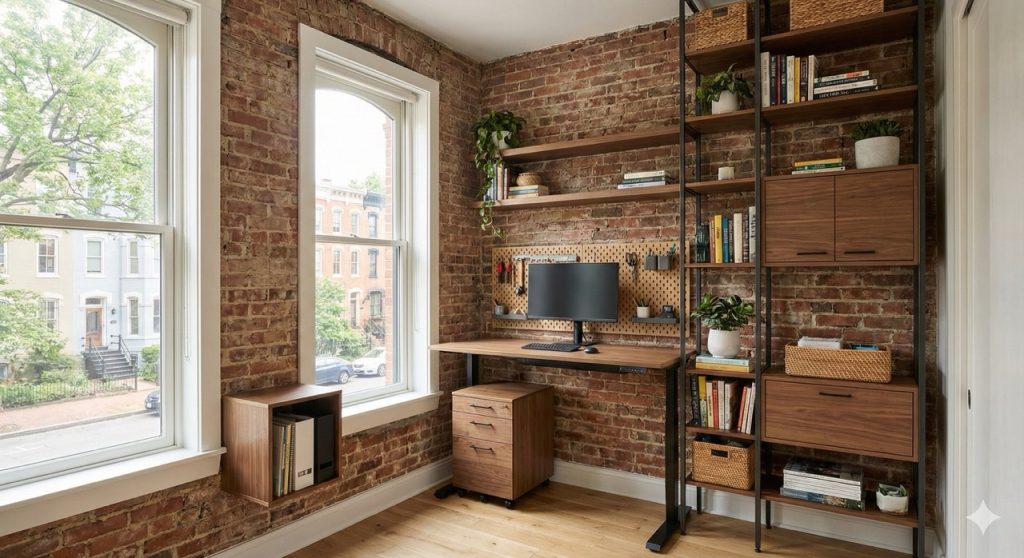
Maximizing Small Office Spaces in DC and Northern Virginia
The Unique Challenge of Historic DC Office Spaces
Working in Washington DC’s historic buildings comes with undeniable charm—exposed brick, high ceilings in some areas, and the prestige of a classic address. However, these same buildings often present significant challenges when it comes to furnishing a functional office space. Two-hundred-year-old structures weren’t designed with modern office needs in mind, and today’s business owners face the reality of narrow stairwells, irregular floor plans, low ceilings in converted spaces, and doorways that make furniture delivery a logistical puzzle.
At All Business Systems, we’ve spent years helping DC and Northern Virginia businesses navigate these unique challenges. Our local expertise means we understand exactly what you’re up against—and more importantly, how to solve it.
Start with Accurate Measurements (and Then Measure Again)
Before you fall in love with any piece of furniture, invest time in thorough space planning. Historic buildings rarely have perfectly square rooms or standard ceiling heights. Measure not just your office dimensions, but also:
- Doorway widths and heights (including frame protrusions)
- Stairwell widths and turn radiuses
- Elevator dimensions (if you’re fortunate enough to have one)
- Ceiling heights, including any beams or ductwork
- Window placement and any architectural features that protrude into the room
Create a simple floor plan on graph paper or use a free online room planner. This visual reference will prevent costly mistakes and help you see how furniture pieces will actually function in your space. Remember that furniture needs clearance for doors, drawers, and chairs to pull out comfortably.
Choosing Furniture That Actually Fits Through Your Door
One of the most common mistakes we see is businesses ordering beautiful furniture that simply cannot be delivered into their historic building. Those charming narrow stairwells and tight corners become obstacles when you’re trying to maneuver a large conference table or executive desk.
Look for furniture with modular designs or pieces that can be assembled on-site. Many modern office furniture systems are specifically designed for difficult delivery situations. L-shaped desks that come in two separate pieces, sectional conference tables, and storage units with removable tops can be lifesavers in historic buildings.
When selecting desks for your space, consider quality standing desks that offer both ergonomic benefits and space-efficient designs. Many standing desk models come with adjustable components that make delivery easier while providing the flexibility your team needs for modern work styles.
Multi-Functional Furniture: Your Secret Weapon
In constrained spaces, every piece of furniture needs to earn its place. Multi-functional furniture allows you to maintain professionalism without sacrificing precious square footage. Consider:
- Desks with built-in storage to eliminate the need for separate filing cabinets
- Credenzas that serve as both storage and additional work surfaces
- Nesting tables that can expand when needed for meetings
- Mobile pedestals that provide storage and can move where needed
- Wall-mounted shelving to maximize vertical space
The key is thinking vertically. Historic buildings may have limited floor space, but you can often use wall space effectively. Tall, narrow bookcases and wall-mounted storage systems keep the floor clear while providing ample storage.
Scale Matters: Avoiding the Furniture-Too-Large Trap
A common mistake in small offices is choosing furniture scaled for larger spaces. An oversized executive desk might look impressive in a showroom, but in a 150-square-foot historic office, it will dominate the room and make the space feel cramped.
Instead, look for furniture that’s proportional to your space. Sleeker profiles, narrower desk depths (48-60 inches instead of 72 inches), and streamlined storage solutions maintain professionalism while respecting your space limitations. Glass or acrylic furniture elements can also create an open feel in tight quarters.
Creating Defined Zones in Open or Irregular Spaces
Historic buildings often have unusual floor plans—converted residential spaces with odd angles, former ballrooms divided into offices, or layouts that defy conventional office design. Use furniture placement to create defined functional zones even in irregular spaces.
Strategic furniture arrangement can designate work areas, meeting spaces, and collaboration zones without requiring walls. Low bookshelves can serve as room dividers, creating privacy while maintaining sight lines. Area rugs can visually define different zones within a larger irregular space.
The Importance of Professional Space Planning
While DIY space planning works for some situations, historic DC office spaces often benefit from professional assistance. An experienced office furniture consultant can identify solutions you might not consider and help you avoid expensive mistakes.
All Business Systems offers comprehensive space planning services specifically tailored to the unique challenges of DC and Northern Virginia’s historic office buildings. We’ve successfully furnished countless offices in buildings from Georgetown to Old Town Alexandria, and we understand the specific constraints these properties present.
Maintaining Professional Aesthetics Despite Constraints
Space limitations don’t mean you have to sacrifice style or professionalism. In fact, thoughtfully selected furniture can enhance a small space’s appeal. Choose quality over quantity—fewer, well-chosen pieces create a more sophisticated impression than a cluttered space filled with mediocre furniture.
Consider a cohesive color palette that makes the space feel larger and more intentional. Lighter colors generally make small spaces feel more open, while a few darker accent pieces add depth and interest. Consistent finishes across furniture pieces create visual continuity that makes a space feel more designed and less cramped.
Working with Local Experts Who Understand DC’s Unique Buildings
The difference between a functional small office and a cramped, frustrating workspace often comes down to furniture selection and placement. All Business Systems has been serving the DC and Northern Virginia business community for years, and we’ve developed deep expertise in maximizing challenging office spaces.
We don’t just sell furniture—we solve problems. Our team understands delivery logistics in historic buildings, knows which furniture lines offer the best space-efficient options, and can help you create a professional workspace that functions beautifully despite space constraints.
Ready to transform your historic DC office space? Contact us at All Business Systems for expert space planning advice and quality furniture solutions designed for your unique needs.