
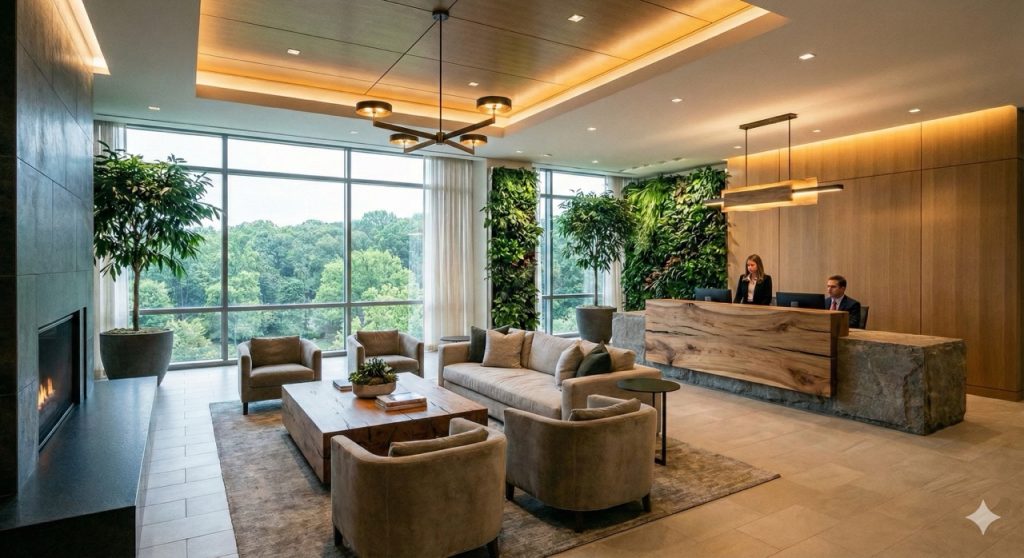
Reception Area Furniture That Makes Clients Want to Do Business With You
Your reception area gets approximately fifteen seconds to make an impression on visiting clients. In that brief window, furniture choices communicate volumes about your company’s financial stability, attention to detail, and organizational values. Whether you’re a Tysons tech firm or a DC consulting practice, reception furniture either builds confidence or raises doubts before any conversation begins.
What High-End Clients Notice First
Sophisticated clients evaluate reception areas with surprising specificity. They notice whether furniture matches in quality and style, suggesting coordinated planning versus piecemeal purchases. They observe condition and wear—scuffs, stains, or dated finishes signal either financial constraints or lack of attention to detail.
Seating comfort matters immediately. Clients who’ve traveled from Northern Virginia into DC, or who arrived early and must wait, form opinions based on whether your furniture accommodates a comfortable wait. Hard, cheap seating suggests you don’t value their time or comfort.
They also notice whether furniture scale matches the space. Oversized furniture in small reception areas feels cramped and suggests poor planning. Sparse furniture in large spaces appears either cheap or indicates the company hasn’t invested in presenting well.
Balancing Welcoming and Impressive
The best reception furniture walks a fine line between approachable and impressive. Too formal—think traditional banker-style furniture—can feel intimidating or stuffy. Too casual—bright colors, lounge-style seating—might seem unprofessional for serious business matters.
Contemporary furniture with clean lines often strikes this balance effectively. Quality pieces in sophisticated finishes communicate professionalism without the stuffiness of traditional executive furniture. Comfortable seating with modern aesthetics says you’re both capable and pleasant to work with.
Consider how clients use your reception area. If meetings often run late and clients wait fifteen minutes, prioritize genuinely comfortable seating with convenient side tables for phones and coffee. If visits are brief handoffs, focus on visual impact over extended comfort.
Strategic Furniture Placement for Reception Impact
How you arrange reception furniture affects perceived professionalism as much as the pieces themselves. Furniture should guide visitors naturally from entrance to reception desk without confusion. Clear sight lines to the receptionist prevent awkward moments where clients aren’t sure where to go.
Waiting area seating should face away from work areas when possible. Clients shouldn’t look directly into your workspace, seeing potentially confidential materials or observing employees in casual moments. Strategic furniture placement creates subtle privacy while maintaining an open, welcoming feeling.
Don’t overlook the reception desk itself. This is your receptionist’s primary workspace and deserves the same quality consideration as client furniture. A quality standing desk at reception demonstrates you invest in employee wellness even in client-facing roles—a detail sophisticated clients notice and appreciate.
Color and Material Choices That Build Trust
Reception area colors should lean conservative unless your industry specifically rewards bold choices. Financial services, legal firms, and consulting practices benefit from neutral palettes with sophisticated finishes. These choices signal stability and serious professional capability.
Technology and creative firms have more flexibility for contemporary colors, but should still avoid anything that might read as frivolous to conservative clients. Even in creative industries, reception areas need to balance personality with professionalism.
Material quality speaks loudly. Genuine leather, solid wood, and quality fabrics indicate financial stability and attention to quality. Obvious synthetic materials or cheap finishes suggest either budget constraints or lack of discernment—neither instills client confidence.
The Cost-Quality Calculation
Reception furniture represents a particularly important investment because it affects every client interaction. Cheap reception furniture saves money short-term but costs opportunities when clients form negative impressions before meetings even start.
Budget $3,000-$8,000 for quality reception furniture in a typical small office. This provides proper seating for 4-6 people, side tables, and a quality reception desk. Larger spaces require proportionally more investment, but the per-square-foot impact remains consistent.
Consider this an acquisition cost divided across all clients who visit your office. If quality reception furniture influences even one additional client to choose your firm over competitors, it’s paid for itself many times over.
Maintaining the First Impression Over Time
Reception areas experience heavy use from diverse visitors. Furniture here needs to withstand traffic while maintaining appearance. Choose fabrics and finishes specifically rated for commercial use—residential-grade furniture won’t hold up to office reception traffic.
Establish maintenance protocols. Reception furniture should be cleaned weekly, with monthly detailed attention to high-touch surfaces. Stains, scuffs, and wear should be addressed immediately rather than allowed to accumulate. Damaged furniture should be repaired or replaced promptly—a worn reception chair undermines your entire professional image.
Plan for eventual replacement even with quality furniture. Most reception furniture requires refreshing every 5-7 years depending on traffic. Budget for this cycle rather than using furniture until it’s obviously worn. Proactive replacement maintains consistent professional presentation.
Special Considerations for Different Industries
Financial services and legal firms should lean toward classic contemporary furniture in rich, conservative finishes. Clients expect these industries to project stability and traditional professionalism. Modern interpretations of classic styles work well—contemporary pieces with substantial presence and quality finishes.
Technology and creative firms can embrace more contemporary aesthetics, but should still prioritize quality and comfort over trendy pieces. Your reception area should feel current and innovative without crossing into gimmicky territory that might age poorly.
Healthcare and wellness businesses need furniture that communicates cleanliness and calm alongside professionalism. Easy-to-clean finishes and soothing colors work better than bold statements. Comfort becomes especially important as clients may be anxious about appointments.
Ready to create a reception area that wins client confidence? Contact us at All Business Systems for expert guidance on reception furniture that makes the right first impression.